Can You Train a Maine Coon? Yes, and Here’s How to Do It!
Maine Coons are often called the “dogs of the cat world” for their loyal, friendly, and highly trainable nature. Unlike some independent-minded cats, Maine Coons are curious, clever, and eager to engage with their human companions. With a bit of patience and the right approach, you can teach your Maine Coon a range of fun tricks—from fetching toys to sitting on command. Ready to turn your Maine Coon into the smartest (and cutest) cat on the block? Here’s how to get started!
1. Start with the Basics: Building Trust and Patience
Training your Maine Coon begins with building a solid foundation of trust. Maine Coons love interacting with people and are motivated by affection, so approach training as a bonding experience. Keep training sessions short and positive to avoid overwhelming them, and always have treats or their favorite toy handy as a reward!
Training Tip: Maine Coons respond well to positive reinforcement. Reward good behavior with treats, affection, or praise—anything that lets them know they’ve done a great job.
2. Teaching Basic Commands: “Sit” and “Stay”
Yes, you can teach your Maine Coon to sit and stay—just like a dog! Start with the “sit” command:
• Hold a treat above their head and slowly move it back. This will encourage them to naturally sit as they look up.
• As soon as they sit, say “sit” and give them the treat along with lots of praise.
• Repeat this process a few times per session, keeping it short and rewarding. Maine Coons love the attention, so make it fun!
Once they’ve mastered “sit,” you can move on to “stay”:
• After they sit, hold your hand up (like a stop sign) and say “stay.”
• Take a step back and, if they remain seated, reward them with a treat.
• Gradually increase the distance as they learn the command.
3. Fun Trick: Teaching Your Maine Coon to Fetch
Many Maine Coons love to play fetch, and it’s a surprisingly easy trick to teach:
• Start with a small, lightweight toy that your Maine Coon likes, such as a crinkly ball or a feathered mouse.
• Toss the toy a short distance and call them back excitedly as they grab it.
• When they bring the toy back (or even come close with it), reward them with a treat and lots of praise.
With repetition, your Maine Coon will associate retrieving the toy with treats and attention, turning fetch into a fun and interactive game.
4. Leash Training for Outdoor Adventures
Believe it or not, you can leash-train your Maine Coon, allowing them to explore the outdoors safely:
• Choose a comfortable, secure harness that fits snugly but isn’t too tight.
• Let them wear the harness indoors first, giving treats and praise as they adjust to it.
• Once they’re comfortable, attach a lightweight leash and let them wander around indoors.
• Gradually progress to outdoor sessions in a quiet, safe area where they won’t be overwhelmed.
Leash training is an excellent way for Maine Coons to safely enjoy the sights and smells of the outdoors, especially since they’re naturally curious and love to explore.
5. Puzzle Feeders and Interactive Toys for Mental Stimulation
Maine Coons are highly intelligent, so keeping their minds engaged is key to preventing boredom. Puzzle feeders and interactive toys are fantastic for stimulating their curiosity:
• Try a puzzle feeder that requires them to work for their food. These toys engage their natural hunting instincts and keep them entertained for longer.
• Interactive laser pointers or feather wands are also great for challenging their mind and body, especially during solo playtime.
• For a real brain workout, consider training them to solve easy puzzles or learn tricks like rolling over. Maine Coons enjoy learning, so the possibilities are endless!
6. Potty Training: Yes, It’s Possible!
If you’re feeling ambitious, you can even train your Maine Coon to use the toilet! Although it requires patience and commitment, some owners have successfully potty-trained their cats:
• Begin by placing the litter box near the toilet and gradually elevating it over time, using stacked books or a platform.
• Once your Maine Coon is comfortable, move the litter box onto the toilet seat.
• Eventually, transition to a litter-filled toilet training kit, which can guide them in using the toilet itself.
While this isn’t for every cat (or cat owner!), Maine Coons’ intelligence and adaptability make them prime candidates for advanced training.
7. Using Clicker Training for Precision
Clicker training can be a fantastic tool to teach your Maine Coon specific actions. The “click” sound helps mark the exact moment your cat performs a desired behavior, making it easier for them to understand:
• Introduce the Clicker: Start by clicking and immediately giving a treat. Repeat until your cat associates the click sound with a reward.
• Reinforce Commands: Use the clicker along with verbal commands like “sit” or “fetch.” Click as soon as your Maine Coon performs the behavior, then reward them with a treat.
• Consistency is Key: Practice regularly and keep sessions short. Maine Coons are quick learners, and clicker training can sharpen their responses over time.
8. Patience and Persistence: Every Cat Learns at Their Own Pace
While Maine Coons are intelligent and trainable, every cat is unique. Some may pick up tricks faster, while others may need a little more time and encouragement. The key is to remain patient, have fun, and celebrate small victories. With consistent practice, you’ll be amazed at how many tricks your Maine Coon can learn!
9. Are You Sure They’re Not Training You?
In true Maine Coon fashion, you might start to wonder who’s really in charge of this training process! Many Maine Coons quickly learn that sitting, fetching, or “staying” earns them treats and attention, leading them to “train” you to keep the rewards coming. It’s all part of their charming personality, and you’ll probably find yourself happily indulging them.
Training your Maine Coon is a fantastic way to build a stronger bond, keep their mind sharp, and give them an outlet for their intelligence and curiosity. From simple commands to leash training and advanced tricks, Maine Coons are more than capable of mastering a variety of skills. So grab those treats, practice patience, and enjoy watching your Maine Coon impress you with their talents—and maybe, just maybe, realize they’re not only trained but have trained you in the process! Happy training!
Understanding the Sweet Symphony of Maine Coon Purrs
Maine Coons aren’t just majestic fluff balls with piercing eyes and big personalities—they’re also maestros of the feline purr. For Maine Coon parents, their soothing, rhythmic purrs are more than just background noise; they’re like a personal love language, offering glimpses into your cat’s heart.
From cozy murmurs of happiness to self-soothing vibrations, Maine Coons have a repertoire of purrs as varied and expressive as their personalities. Here’s your guide to decoding the beautiful symphony of Maine Coon purrs and what each one might mean.

Maine Coons aren’t just majestic fluff balls with piercing eyes and big personalities—they’re also maestros of the feline purr. For Maine Coon parents, their soothing, rhythmic purrs are more than just background noise; they’re like a personal love language, offering glimpses into your cat’s heart.
From cozy murmurs of happiness to self-soothing vibrations, Maine Coons have a repertoire of purrs as varied and expressive as their personalities. Here’s your guide to decoding the beautiful symphony of Maine Coon purrs and what each one might mean.
1. The Pure Bliss Purr: “Life Is Purrfect with You”
This is the quintessential cat purr, soft and velvety, signaling pure, unfiltered happiness. You’ll hear it when your Maine Coon is curled up on your lap, half-asleep, or when you’re gently scratching that sweet spot behind their ears.
It’s the sound of ultimate contentment, their way of saying, “I feel safe, loved, and utterly at peace.” This purr often comes with slow blinks or those adorable kneading paws, making it a full sensory declaration of love.
Pro Tip: Cherish these moments—they’re your Maine Coon’s way of letting you know they wouldn’t trade their time with you for anything.

2. The Playful Anticipation Purr: “Let’s Have Some Fun!”
Maine Coons are playful at heart, and their purrs often reflect their excitement. This energetic, bouncy purr might bubble up when you grab their favorite feather wand or just before they launch themselves into a game of chase.
It’s like a giggle in purr form, their way of saying, “I’m so ready for this!” This purr often accompanies playful body language, like tail swishes and that telltale crouch before a pounce.
Fun Tip: Match their energy with an interactive toy session—they’ll reward you with even more joyful sounds.

3. The Self-Soothing Purr: “I’ve Got This”
While purring is often associated with happiness, it can also be a tool for self-comfort. If your Maine Coon lets out a softer, more uneven purr during a vet visit, a thunderstorm, or a stressful moment, they might be calming themselves.
This “it’s okay, I’m handling it” purr is a reminder of the dual purpose of purring: it’s both an expression of emotion and a soothing mechanism. It’s their way of saying, “I’m a little stressed, but I’m managing.”
Pro Tip: Offer a calm, reassuring presence during these moments—it reinforces their sense of safety.

4. The Conversation Starter Purr: “Let’s Talk”
Maine Coons are famously chatty cats, and sometimes their purrs are less about relaxation and more about grabbing your attention. If your kitty sidles up to you with a unique, conversational purr, they might be saying, “Hey, can we discuss dinner plans?” or “It’s snuggle o’clock, human!”
This purr often pairs with their other charming vocalizations, like chirps and trills, creating a full “conversation” that makes you feel like you’re truly connecting with them.
Fun Idea: Respond to their “talking purrs” with words or sounds—they’ll likely purr louder, thrilled to have you join their chat.

5. The Love Serenade: A Rare Romantic Melody5
While less common in spayed or neutered Maine Coons, intact cats may occasionally use a more intense, persistent purr during mating season. This sound is their version of a romantic serenade—a purr infused with purpose.
Even if you don’t hear this specific purr often, it’s a testament to the depth of the Maine Coon’s vocal range and their ability to use purring as a form of communication for every stage of life.

6. The Healing Purr: “Self-Care, Feline Style”
There’s something almost magical about the theory that cats use their purrs to heal themselves. Studies suggest that the vibrations of a cat’s purr can reduce pain, ease inflammation, and promote bone and tissue healing.
If your Maine Coon is softly purring while lying quietly, it could be their way of resting, recovering, or simply giving themselves a moment of calm. It’s as though they’re wrapping themselves in a cocoon of comfort, and just being near them in these moments can feel soothing for you, too.

A Love Language in Every Purr
Each purr your Maine Coon offers is more than a sound—it’s a heartfelt message wrapped in soft vibrations. Whether it’s the blissful hum of happiness, the excited rumble of playtime, or the soothing murmur of self-comfort, every purr adds depth to your connection.
The next time your Maine Coon shares their purring symphony, take a moment to listen closely. It’s their way of telling you, “You’re my safe space, my favorite person, and my best friend.”
With each gentle rumble, your Maine Coon is reminding you of the extraordinary bond you share—a relationship filled with warmth, love, and the sweetest symphony of sound
Do Maine Coon Cats Dream? Exploring the Sleep Secrets of Our Feline Friends!
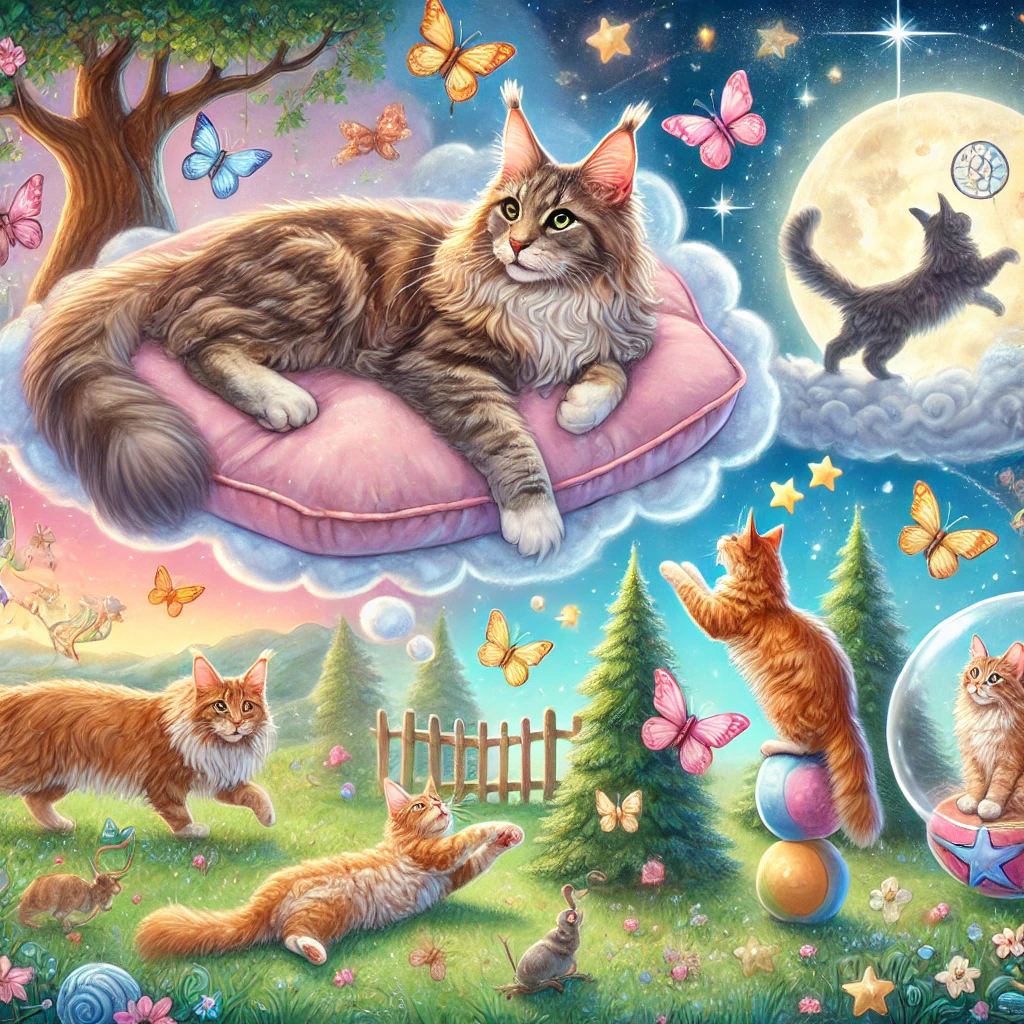
If you’ve ever watched your Maine Coon cat as it sleeps, you might have noticed the occasional twitching of its paws, a flick of the tail, or even a soft meow escaping as it slumbers. These little movements can make us wonder—do Maine Coon cats dream? The answer is a resounding yes! Just like humans, Maine Coons enter sleep cycles that include dreaming, and their dreams are as fascinating as they are adorable.

If you’ve ever watched your Maine Coon cat as it sleeps, you might have noticed the occasional twitching of its paws, a flick of the tail, or even a soft meow escaping as it slumbers. These little movements can make us wonder—do Maine Coon cats dream? The answer is a resounding yes! Just like humans, Maine Coons enter sleep cycles that include dreaming, and their dreams are as fascinating as they are adorable.
How Cats Sleep: The Science Behind the Snooze
Cats are known for their love of sleep, often dozing anywhere from 12 to 16 hours a day. For Maine Coons, a breed known for its playful yet relaxed personality, napping is practically an art form. But just like us, cats go through different stages of sleep: light sleep, deep sleep, and REM (Rapid Eye Movement) sleep. It’s during the REM stage that dreaming occurs.
In REM sleep, the brain is highly active, and this is when Maine Coons are most likely to experience dreams. If you see your cat’s eyes moving rapidly under its closed eyelids, or notice little twitches and purrs, it’s likely deep in a dream state.

What Do Maine Coons Dream About?
So, what exactly are they dreaming of? While we can’t say for certain, animal behavior experts suggest that cats’ dreams are likely to be filled with experiences from their daily lives. Given the adventurous nature of Maine Coons, their dreams might be filled with:
• Chasing imaginary prey – Even domesticated Maine Coons retain a strong hunting instinct. In their dreams, they may be chasing birds, mice, or even a favorite toy.
• Exploring new territories – Maine Coons are curious by nature and love exploring. Dreamland may give them the chance to wander through grassy fields, climb towering trees, or sneak through mysterious new rooms.
• Interactions with their favorite humans and animal friends – If your Maine Coon loves cuddles or playtime with you, they might dream about these happy moments, reliving them in their own unique way.
• Feasting on treats – Food is often on a cat’s mind, and it wouldn’t be surprising if their dreams include a little feast of their favorite snacks.

Why Do Cats Twitch While Dreaming?
The adorable twitching, paw paddling, and tiny squeaks are all part of the dream experience. These movements are due to the activation of motor neurons during REM sleep. Unlike humans, who remain mostly still due to muscle paralysis in REM sleep, cats’ bodies are more likely to express small movements. This is why you’ll sometimes see your Maine Coon acting out parts of its dream with subtle movements.

Can Cats Have Nightmares?
Just like pleasant dreams, it’s possible that cats can have nightmares too. If your Maine Coon suddenly wakes up from a deep sleep looking startled or disoriented, it might have been experiencing a bad dream. Nightmares could involve past experiences, such as trips to the vet or other moments of stress. If you notice your cat waking up this way, you can offer gentle reassurance with soft pets to help it feel secure.

How to Make Sure Your Maine Coon Sleeps Soundly
Cats benefit from a restful and safe sleep environment, just like we do. Here are a few tips to ensure your Maine Coon gets the best sleep possible:
• Provide a cozy bed in a quiet spot where they won’t be disturbed.
• Encourage playtime during the day to help release energy, making their sleep more restful.
• Maintain a calm environment close to bedtime, especially if your Maine Coon is sensitive to loud sounds or sudden movements.

The Fascinating World of Feline Dreams
Knowing that Maine Coons dream adds an extra layer of wonder to our relationship with them. Their dreams offer a glimpse into their minds, where they explore, hunt, and enjoy life just as they do when they’re awake. So, the next time you catch your Maine Coon twitching and murmuring in its sleep, enjoy the moment—you’re witnessing a small piece of the magical dream world of Maine Coons!
The Playful Side of Maine Coons: Why Every Day Is an Adventure with These Gentle Giants
Maine Coons are the ultimate package: majestic looks, affectionate personalities, and a playful spirit that’s hard to resist. If you’ve ever watched your Maine Coon dash after a toy, leap onto a high perch, or even splash around in water (yes, water!), you know they’re anything but your average cat. With their quirky play styles and dog-like energy, these gentle giants are always ready to bring fun into your life. Let’s dive into what makes Maine Coon playtime so special, the best toys to keep them entertained, and how to turn everyday moments into epic adventures.

Maine Coons are the ultimate package: majestic looks, affectionate personalities, and a playful spirit that’s hard to resist. If you’ve ever watched your Maine Coon dash after a toy, leap onto a high perch, or even splash around in water (yes, water!), you know they’re anything but your average cat. With their quirky play styles and dog-like energy, these gentle giants are always ready to bring fun into your life. Let’s dive into what makes Maine Coon playtime so special, the best toys to keep them entertained, and how to turn everyday moments into epic adventures.
1. Play, But Make It Maine Coon Style
When Maine Coons play, they don’t do it halfway. These big, intelligent cats have unique ways of having fun that often mirror the behavior of a playful pup.

Fetch, Maine Coon Edition
Yep, you read that right. Many Maine Coons love playing fetch. Toss a crinkle ball, soft plush toy, or even a balled-up piece of paper, and watch as your Maine Coon pounces, grabs it, and proudly brings it back for another throw. Not all Maine Coons fetch, but the ones who do make it a game you’ll both enjoy.

Interactive Challenges
Maine Coons are smarty-pants. They thrive on toys that challenge their brains, like puzzle feeders or treat-dispensing toys. It’s not just about burning energy—it’s about engaging their curious minds. These toys combine food (their favorite motivator) with problem-solving, making playtime twice as rewarding.

2. The Kings and Queens of Climbing
Maine Coons are natural-born climbers. With their sturdy builds and strong muscles, they love scaling tall furniture, shelves, and cat trees. If there’s a high perch to conquer, they’re on it.

Cat Trees Built for Royalty
A Maine Coon’s dream? A multi-level cat tree with platforms, hammocks, and cozy nooks to explore. Make sure it’s big and sturdy enough to handle their size—these aren’t your average cats, after all. Bonus points if it gives them a great view of the room or a nearby window for “Cat TV.”

Wall-Mounted Adventures
Want to take it up a notch? Install wall-mounted shelves and perches at varying heights to create a vertical playground. Maine Coons love the challenge of navigating new heights, and these setups can turn your home into their personal jungle gym.

Knock-Knock—It’s Your Maine Coon
Fair warning: Maine Coons love swatting objects off tables and counters. With their size and strength, a single paw tap can send even the heaviest items flying. To save your valuables, give them safe, sturdy toys to bat around instead—and maybe keep the fragile stuff out of reach!

3. Splish, Splash—Your Maine Coon’s in the Water
Most cats avoid water like the plague, but not Maine Coons. These quirky cats often have a deep fascination with all things wet.

Water Bowl Shenanigans
If you’ve ever caught your Maine Coon pawing at their water bowl or splashing around in the sink, you’re not alone. It’s like they’re drawn to water’s movement and sound, making even a simple bowl of water an irresistible playground.
Turn the Faucet On
Let your Maine Coon play with a slow-dripping faucet under supervision. They’ll love batting at the droplets or just watching the water flow.

Floating Toy Fun
Drop a few floating toys into a shallow dish of water and let your Maine Coon fish for them with their paws. It’s an easy, low-mess way to indulge their aquatic curiosity without turning your bathroom into a splash zone.

4. Top Toys for Maximum Fun
Want to keep your Maine Coon entertained and happy? Stock up on these must-have toys:
• Feather Wands & Laser Pointers: Maine Coons have a strong prey drive, and nothing gets them moving like toys that mimic the darting, fluttering movements of prey. Wave a feather wand or aim a laser pointer for endless entertainment.
• Puzzle Feeders: Keep their big brains busy with a treat-dispensing puzzle. It’s the perfect mix of mental stimulation and tasty rewards.
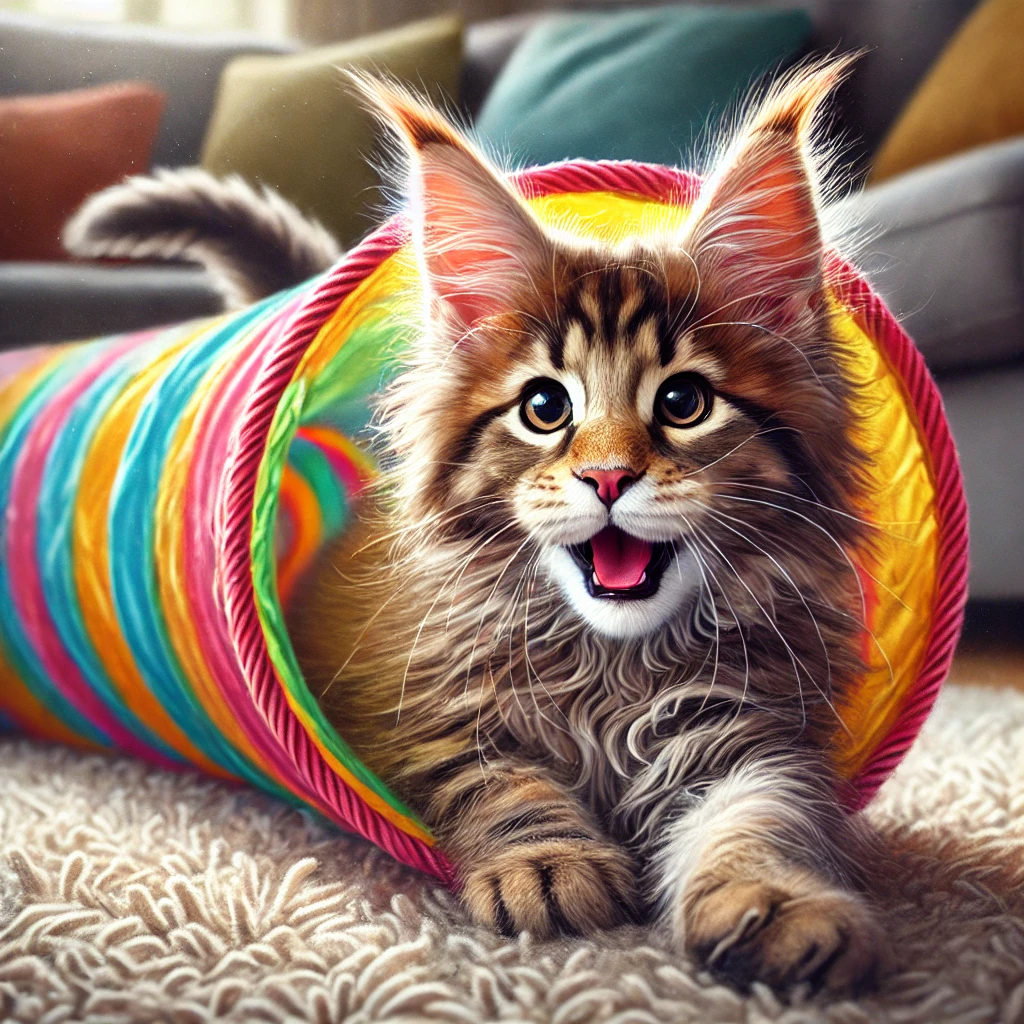
• Crinkle Tunnels: Maine Coons love exploring, and a crinkle tunnel combines sound, movement, and a great hiding spot for sneak attacks.
• Durable Plushies: Maine Coons play rough, so invest in sturdy toys that can handle bunny kicks and enthusiastic pouncing.

5. The Social Side of Play
Maine Coons aren’t just playful—they’re social butterflies. Playtime is as much about bonding as it is about burning energy.
Playtime with Humans
Maine Coons adore interactive play. Whether it’s chasing a wand toy, playing hide-and-seek, or fetching their favorite toy, they thrive on the connection they share with their humans during play.

Playtime with Other Pets
If you’ve got other pets, your Maine Coon will likely be the life of the party. They’re often great at reading social cues and adjusting their play style to match their furry friends—whether it’s another cat or a dog. Just keep an eye on the interactions to ensure everyone’s having fun.

6. Keeping Playtime Safe and Fun
While Maine Coons love a good romp, safety always comes first:
• Rotate Toys: Switch up their toys regularly to keep things fresh and exciting.
• Supervise Water Play: If your Maine Coon is splashing around, keep an eye on them to avoid slips or spills.
• Watch for Signs of Overstimulation: Maine Coons have big energy, but even they need a break. If they start to look tired or overwhelmed, give them space to wind down.

Maine Coon Playtime = Bonding Time
Playtime with a Maine Coon is anything but ordinary. From their love of fetch to their fascination with water, these cats bring endless joy and entertainment to every home they grace. By offering a mix of mentally stimulating toys, climbing opportunities, and interactive play, you’ll keep your Maine Coon engaged, healthy, and happy.
So grab a feather wand, prepare for some splashy antics, and let your Maine Coon’s playful spirit shine. Because when it comes to fun, these gentle giants know how to turn every day into an adventure.
Why Your Maine Coon Loves to Watch TV (and Might Even Hog the Remote)
If you’ve ever caught your Maine Coon curled up on the couch, watching TV with intense focus, you’re not alone. These majestic, oversized fluffballs seem to have a surprising appreciation for the latest dramas, nature documentaries, and—of course—anything with fast-moving images! While it might seem like just a cute quirk, your Maine Coon’s love for TV actually makes a lot of sense. Here’s a fun look at why Maine Coons are the couch potato companions we never knew we needed!

If you’ve ever caught your Maine Coon curled up on the couch, watching TV with intense focus, you’re not alone. These majestic, oversized fluffballs seem to have a surprising appreciation for the latest dramas, nature documentaries, and—of course—anything with fast-moving images! While it might seem like just a cute quirk, your Maine Coon’s love for TV actually makes a lot of sense. Here’s a fun look at why Maine Coons are the couch potato companions we never knew we needed!
1. Big Cats, Big Brains
Maine Coons are known for their intelligence, and it’s one of the reasons they’re drawn to screens. They’re incredibly curious and observant, and the moving images on a TV screen are like a puzzle waiting to be solved. Whether it’s following a leaping animal in a nature show or a car zooming by in a commercial, Maine Coons seem to think, “This could be prey! Or at least something fun to chase!” Don’t be surprised if your cat starts swatting at the screen or, if they’re really bold, tries to “capture” what’s happening on TV.

2. Nature Documentaries = Cat Netflix
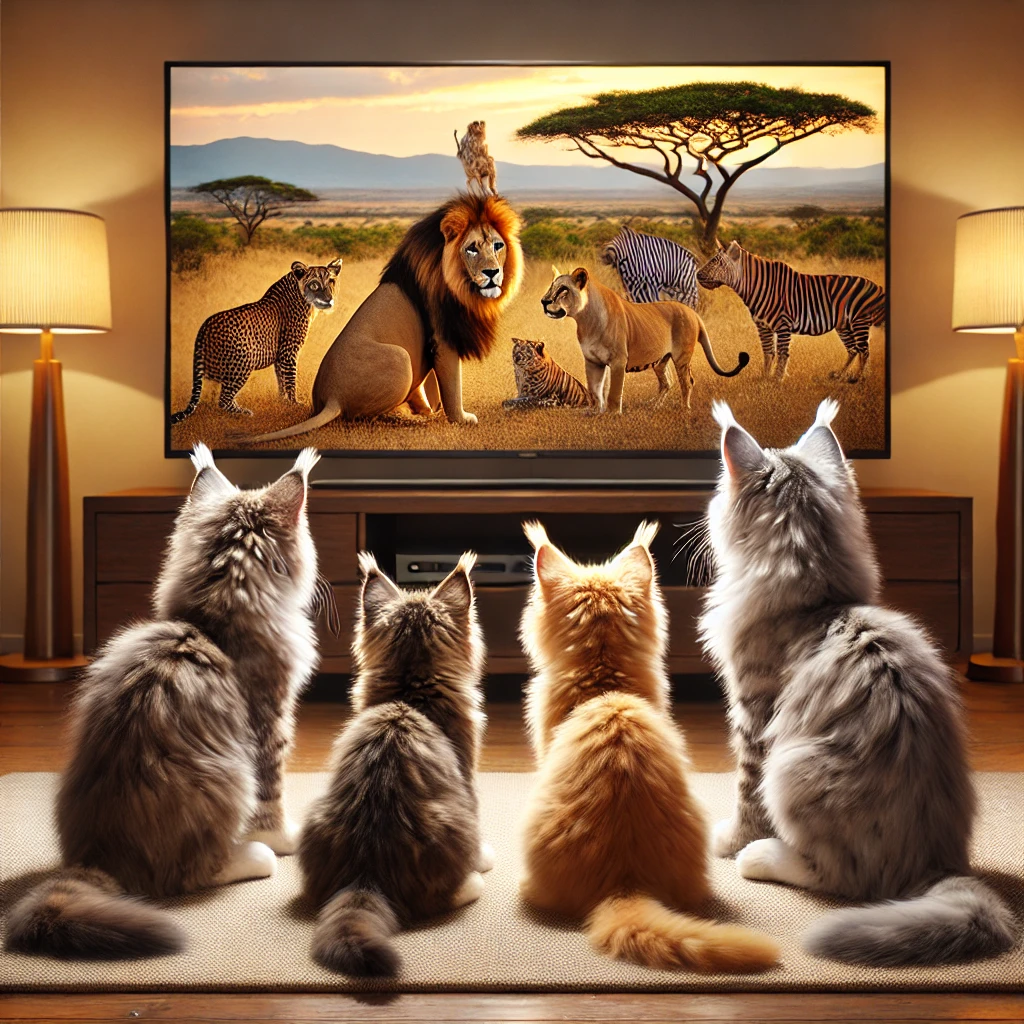
For Maine Coons, nature documentaries are the cat equivalent of Netflix binge-watching. Birds flying, mice scurrying, fish swimming—it’s all incredibly stimulating for these natural-born hunters. Sure, your Maine Coon might be a pampered indoor kitty, but that doesn’t stop them from feeling the thrill of the (virtual) hunt. And if you leave on “Bird TV” or “Cat TV” channels while you’re out, don’t be surprised if your Maine Coon sits in front of the screen, entranced, for hours. It’s their idea of premium content.

3. The Bigger, the Better
With their large, muscular build and luxurious coats, Maine Coons are often called the “gentle giants” of the cat world, so it only makes sense that they’d appreciate a big screen. After all, if they can barely fit on a normal-sized cat bed, why would they settle for a tiny tablet? For a Maine Coon, a widescreen TV is the perfect viewing experience. They’ll happily sit front and center, mesmerized by every pixel, and if they block your view—well, sorry, but it’s their turn to watch!

4. Bonding Time with Their Humans
Maine Coons are famously affectionate and love spending time with their families, even if it means watching something they don’t quite understand. If you settle in to watch your favorite show, don’t be surprised if your Maine Coon joins you, snuggling up close and keeping one eye on the TV. It’s not so much about what you’re watching as it is about enjoying time together. Your Maine Coon might even make themselves the honorary “remote guardian,” lying on the remote to make sure you don’t change the channel.

5. They Just Might Judge Your Taste
One of the funniest things about Maine Coons is their expressive personalities. If your Maine Coon seems unimpressed with your choice of show, they might give you a look that clearly says, “Really? You’re watching this?” They’ll yawn, turn around, and maybe even flick their tail in mild disdain. But put on something action-packed or full of animal scenes, and they’ll perk up instantly. So, if you find yourself watching a lot of nature shows or animal-themed programs, it’s probably because your Maine Coon has taken control of the TV lineup!

6. Sounds Are Half the Fun
Maine Coons are curious not only about visuals but also sounds. Animal calls, rustling leaves, and the squeaks of small creatures can captivate them as much as any image on the screen. Sometimes they might even try to “talk back” with chirps, trills, or meows, as if they’re part of the show themselves! Just be prepared for some enthusiastic reactions if they hear a bird chirping or a dog barking—it might be as close as they can get to chatting with the characters on screen.

7. The Great “Screen Protector” Debate
Of course, if your Maine Coon really gets into the action, they might want to get a little closer… and closer… until they’re right up against the screen. Some Maine Coon owners have to deal with “screen swatters” who can’t resist batting at their favorite moving objects. If your cat gets a little too enthusiastic, it might be time to invest in a screen protector—because the last thing you want is for them to “catch” something on screen that ends up costing you a new TV!

8. The Ideal Binge-Watch Buddy
Let’s face it: Maine Coons make the best binge-watch buddies. They’re calm, they’re affectionate, and they’ll stick with you through every twist and turn of your favorite show. They don’t care if you’re rewatching a cheesy rom-com or diving into a dark thriller—they’re just happy to be by your side. And the best part? They won’t interrupt with spoilers or insist on changing the channel (unless a really good bird video is on, of course).

The Verdict: Maine Coons and TV Are a Perfect Match
So, why does your Maine Coon love watching TV? It’s all about a combination of natural curiosity, love of movement, social bonding, and maybe a hint of diva attitude. Next time you settle in for a movie night, don’t be surprised if your Maine Coon takes up a prime spot on the couch, ready to join in. And who knows—they might even become the biggest TV critic in the house!
From nature documentaries to animated animals, Maine Coons bring a whole new level of enjoyment to screen time. Just be warned: once your Maine Coon discovers the joys of TV, you might find them staring at the screen even when you’re not around… and possibly lobbying for the remote.
Grooming the Fluff: How to Keep Your Maine Coon’s Coat Looking Fabulous
Maine Coons are adored not only for their friendly, playful personalities but also for their lush, majestic coats. This fluff may look effortless, but keeping it in top shape requires a bit of attention and care. Their long, luxurious fur can be prone to tangles and matting, and shedding season? Let’s just say you might see enough fur to build another cat! But with a solid grooming routine, you can keep your Maine Coon’s coat looking fabulous all year round. Here’s everything you need to know to make sure your fluffy friend stays picture-perfect.

Maine Coons are adored not only for their friendly, playful personalities but also for their lush, majestic coats. This fluff may look effortless, but keeping it in top shape requires a bit of attention and care. Their long, luxurious fur can be prone to tangles and matting, and shedding season? Let’s just say you might see enough fur to build another cat! But with a solid grooming routine, you can keep your Maine Coon’s coat looking fabulous all year round. Here’s everything you need to know to make sure your fluffy friend stays picture-perfect.
1. Brush, Brush, Brush!
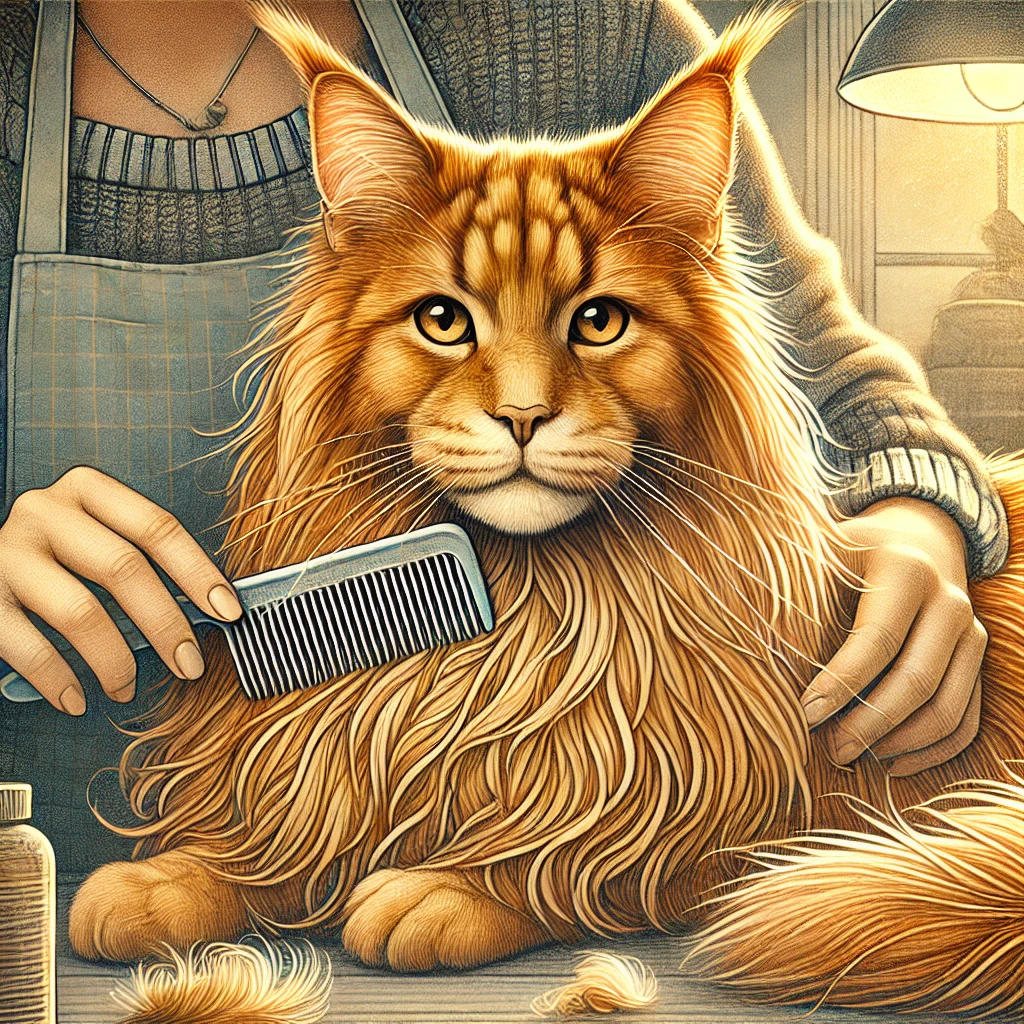
Regular brushing is the secret weapon in keeping that gorgeous Maine Coon coat in check. Not only does brushing remove loose fur and prevent mats, but it’s also a fantastic bonding experience for you and your kitty.
How Often: Aim to brush your Maine Coon at least 2-3 times a week. During shedding seasons (spring and fall), you may want to increase to daily brushing to keep the fluff under control.
What to Use: A slicker brush or wide-toothed comb works wonders for Maine Coons. Look for brushes with fine bristles for the undercoat and thicker pins for the top layer. Some pet owners also swear by de-shedding tools, which reach deep into the coat to remove loose undercoat hair.
Techniques:
• Start Slowly: Begin by brushing in the direction of the fur, using gentle strokes.
• Tackle Tangles Carefully: For any tangles, use a detangling spray (designed for cats) and gently work through the knots with a wide-toothed comb.
• Watch the Undercoat: Pay extra attention to areas prone to matting, like the chest, belly, and back legs, where the undercoat is thickest.
Pro Tip: Make brushing a fun experience! Give treats or gentle pets along the way so your Maine Coon associates grooming time with positive rewards.

2. Managing Mats and Tangles
Mats can form quickly, especially if your Maine Coon’s coat isn’t brushed regularly. Once mats start to form, they can be uncomfortable for your cat and tough to remove.
Removing Mats:
• Use a mat splitter or mat comb to gently break up the mat. Never try to pull or cut out a mat with scissors, as it’s easy to accidentally nip the skin.
• For stubborn mats, try applying a detangling spray and gently working through it with your fingers or a comb.
Preventing Mats:
Regular brushing and keeping the coat clean and dry are your best defenses. If your Maine Coon tends to mat easily, consider a professional groomer for help with serious matting issues.
3. Bathing Your Maine Coon
Yes, Maine Coons tend to have a reputation for being less water-shy than most cats, but that doesn’t mean they need frequent baths! A monthly or bi-monthly bath is usually sufficient to keep their coat fresh and reduce shedding.
How to Bathe Your Maine Coon:
• Prep the Bathroom: Have everything ready—cat shampoo (make sure it’s specifically for cats!), a gentle spray nozzle, and towels.
• Use Lukewarm Water: Fill the tub with a couple of inches of lukewarm water, then slowly wet your Maine Coon’s coat.
• Shampoo and Rinse: Gently lather with cat shampoo, avoiding the face and ears. Rinse thoroughly to prevent residue.
• Towel Dry: Use a soft towel to pat your cat dry. Maine Coons have thick coats that take a while to dry, so be patient or consider a pet-safe blow dryer on a low, cool setting if your cat tolerates it.
Pro Tip: If your Maine Coon isn’t a fan of baths, try giving them a treat or toy afterward to make it a rewarding experience.

4. Handling Seasonal Shedding
Maine Coons shed year-round but tend to “blow” their coat in spring and fall, which can mean fluff EVERYWHERE.
Combat the Shed:
• Up the Brushing Game: During shedding season, increase brushing to daily sessions.
• Use a De-shedding Tool: Tools designed for undercoat shedding, like the Furminator, can help manage the extra hair.
• Keep Furniture Covered: If your Maine Coon loves a particular spot, a washable blanket or cover can help keep the hair off your furniture.

5. Nutrition Matters
A healthy coat starts from within. High-quality cat food rich in protein and essential fatty acids can contribute to a shinier, healthier coat.
Omega-3 and Omega-6: Look for cat foods that list fish oil or flaxseed oil as ingredients. You can also ask your vet about safe omega supplements if your Maine Coon’s coat is looking a little lackluster.
Hydration: Make sure your cat has access to fresh water at all times. Proper hydration supports skin health and can reduce shedding.

6. Nail Trimming and Ear Cleaning: Essential Add-Ons
Grooming isn’t just about the coat. Regular nail trimming and ear cleaning are also part of a complete grooming routine for Maine Coons.
Nail Trimming: Aim to trim your Maine Coon’s nails every few weeks. This keeps their claws healthy and prevents accidental scratches (for both you and your furniture!).
Ear Cleaning: Check your cat’s ears periodically and gently clean with a cat-safe ear cleaner if you notice any buildup. Clean ears reduce the chance of infections, keeping your Maine Coon feeling fresh and comfortable.

7. Consider Professional Grooming
For those with busy schedules or Maine Coons who aren’t keen on home grooming, a professional groomer can be a lifesaver. Groomers have specialized tools to handle mats, clean the coat, and trim nails, leaving your Maine Coon looking its best without the fuss.

Fabulous Fluff for Your Maine Coon
Keeping your Maine Coon’s coat looking fabulous is both a science and an art. With regular brushing, occasional baths, and attention to diet and hydration, you can keep their majestic coat free from tangles, mats, and excess shedding. Grooming also strengthens the bond between you and your Maine Coon, turning a routine task into quality time with your fluffy companion.
So roll up your sleeves, grab that brush, and enjoy keeping your Maine Coon looking as fabulous as they feel. After all, their luxurious coat is a big part of what makes them the kings and queens of the cat world!
The Importance of Knowing Cat First Aid When You Own a Maine Coon
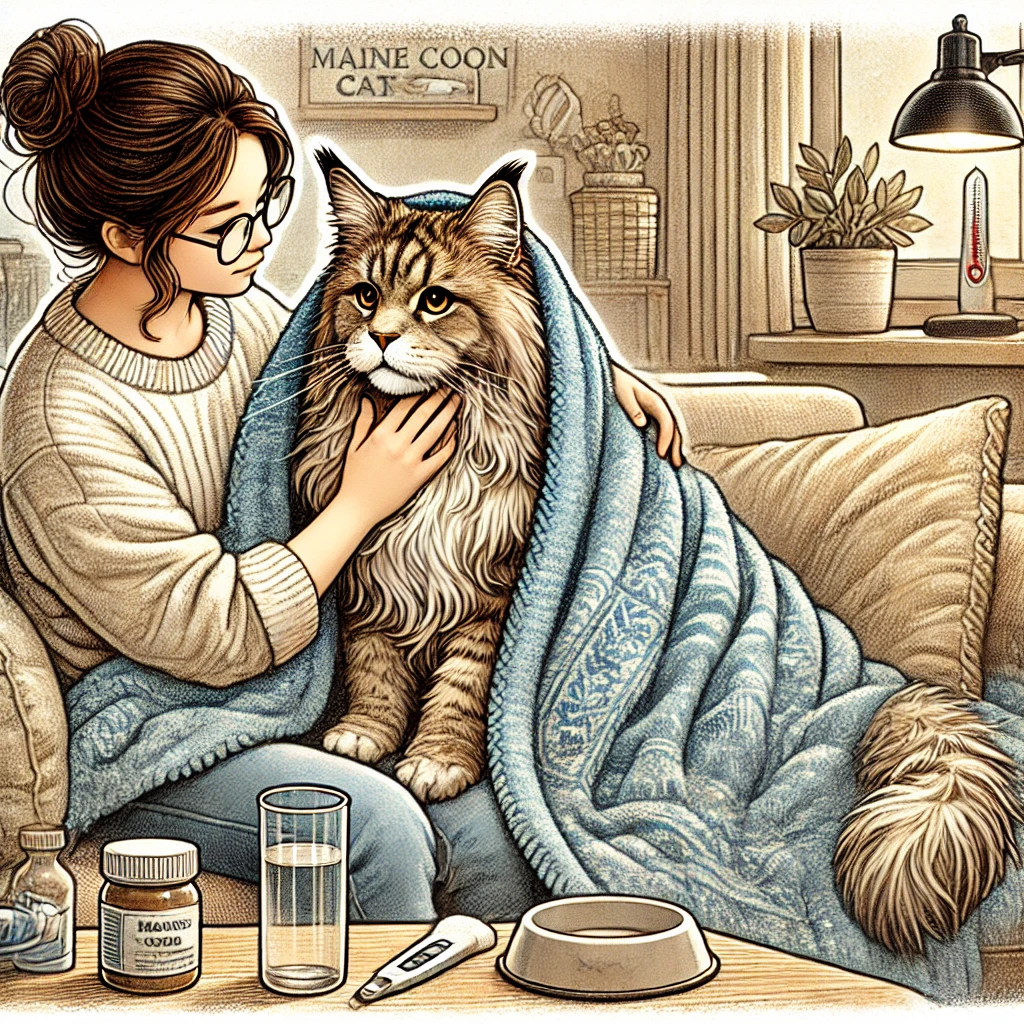
Maine Coon cats are known for their majestic size, playful personalities, and loyal companionship. With their curious and adventurous nature, they often find themselves exploring, climbing, and occasionally getting into minor mishaps. As a Maine Coon owner, being prepared with basic cat first aid can make all the difference in ensuring your furry friend stays safe and healthy. Knowing how to respond in an emergency can help prevent minor injuries from becoming serious, reduce your cat’s discomfort, and give you peace of mind as a responsible cat owner.

Maine Coon cats are known for their majestic size, playful personalities, and loyal companionship. With their curious and adventurous nature, they often find themselves exploring, climbing, and occasionally getting into minor mishaps. As a Maine Coon owner, being prepared with basic cat first aid can make all the difference in ensuring your furry friend stays safe and healthy. Knowing how to respond in an emergency can help prevent minor injuries from becoming serious, reduce your cat’s discomfort, and give you peace of mind as a responsible cat owner.
Why Cat First Aid Matters for Maine Coon Owners
Maine Coons, with their large size and playful nature, have unique needs and risks. They are prone to specific health issues, such as heart conditions (like hypertrophic cardiomyopathy), dental problems, and joint issues due to their larger frames. They also have a knack for finding ways to squeeze into small spaces, jump from high spots, or get tangled in cords or toys. While these characteristics make them endearing and entertaining, they also mean that small injuries or accidents can happen. Having a basic understanding of cat first aid allows you to handle these situations confidently and calmly.
Essential First Aid Skills Every Maine Coon Owner Should Know
Here are some key cat first aid skills that can help you care for your Maine Coon in an emergency situation:
1. Handling Minor Cuts and Scratches
• Maine Coons love to explore, and sometimes that results in minor cuts or scratches, especially if they play with other animals or explore the outdoors.
• Clean the wound gently with saline solution or warm water and apply an antiseptic recommended for pets. Avoid using alcohol or hydrogen peroxide, as these can be too harsh and delay healing.
• Monitor the wound for signs of infection (swelling, redness, or discharge), and seek veterinary care if it doesn’t improve.

2. Dealing with a Sprain or Broken Limb
• Due to their large size, Maine Coons can occasionally injure themselves during high jumps or rough play.
• If you suspect a sprain or broken limb, try to keep your cat as calm and still as possible. Gently wrap the affected limb with a clean cloth to immobilize it and prevent further injury.
• Take your Maine Coon to the vet as soon as possible for a proper diagnosis and treatment plan.

3. Recognizing Symptoms of Heatstroke
• Maine Coons have thick, luxurious coats, which can put them at risk for heatstroke in hot weather.
• Signs of heatstroke include panting, drooling, lethargy, and a rapid heartbeat. If you suspect heatstroke, move your cat to a cool area, offer small amounts of water, and use a damp cloth to cool its body, especially the paws, underbelly, and head.
• Avoid using ice-cold water, as this can shock the system. Contact a vet for further advice.

4. Performing CPR and the Heimlich Maneuver for Cats
• While rare, it’s possible for cats to choke on small objects or go into cardiac distress. Knowing how to perform cat CPR and the Heimlich maneuver can be lifesaving.
• If your Maine Coon is choking, carefully open its mouth to see if you can safely remove the object with tweezers. If not, you may need to perform a modified Heimlich maneuver by applying gentle but firm pressure to the abdomen.
• CPR on a cat involves chest compressions and rescue breathing, but it’s best to take a pet first aid course to learn the proper technique.

5. Treating Poisoning or Toxin Exposure
• Maine Coons, like all cats, are curious and might chew on plants, eat human food, or lick cleaning products that can be harmful.
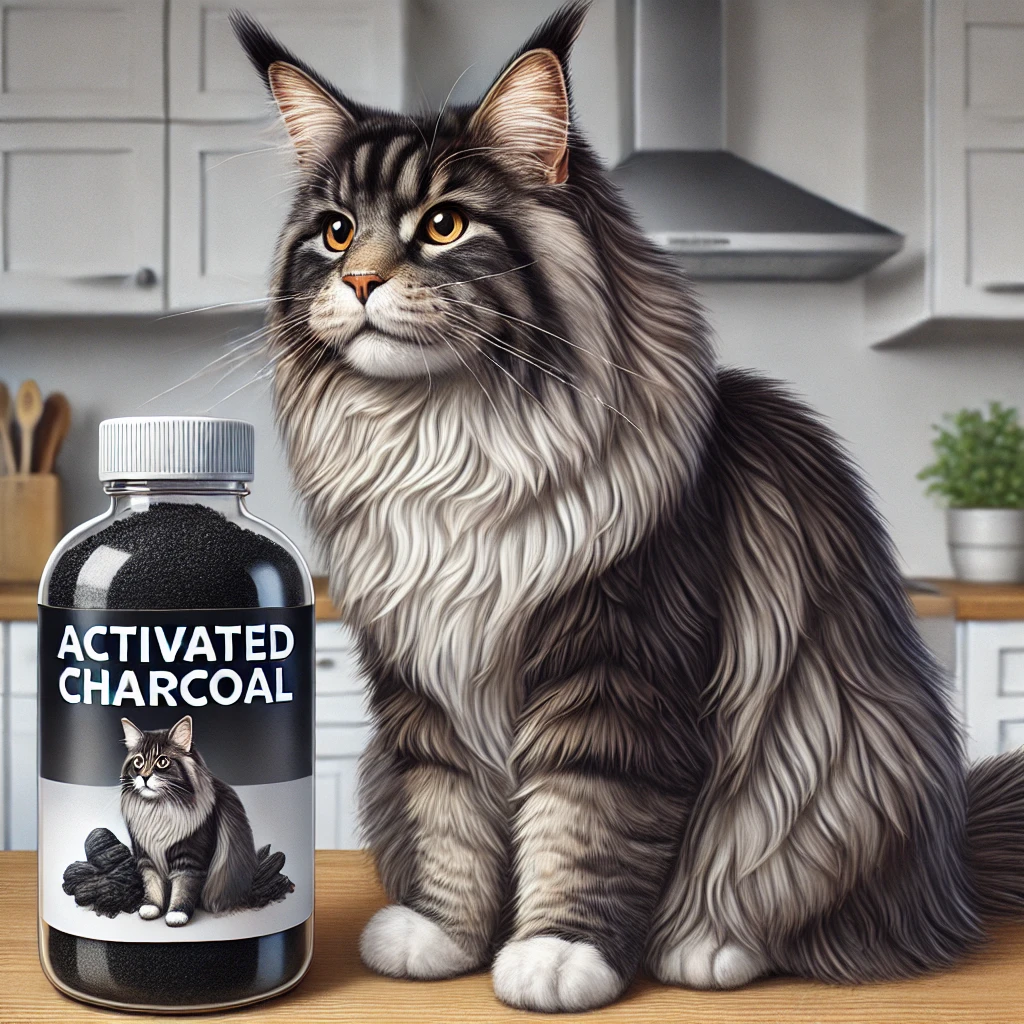
• If you suspect poisoning, try to identify the toxin and contact your vet or a pet poison control center immediately. Avoid trying to induce vomiting unless instructed by a professional, as this can sometimes cause more harm.
Creating a Cat First Aid Kit
Having a dedicated first aid kit for your Maine Coon can save precious time in an emergency. Here’s what to include:
• Gauze pads and medical tape
• Tweezers and scissors
• Pet-safe antiseptic solution
• Saline solution for cleaning wounds
• A digital thermometer
• Soft blankets for warmth or to use as a stretcher
• A pet-specific first aid guide
• Contact information for your vet and the nearest 24-hour animal hospital

Knowing When to Call the Vet
While first aid is helpful for managing minor injuries, certain situations require professional veterinary care. If you notice symptoms like difficulty breathing, persistent vomiting, unresponsiveness, or severe bleeding, seek immediate help from a vet.

Peace of Mind and Preparedness
Learning cat first aid is about more than just emergency skills—it’s a way to show love and commitment to your Maine Coon’s well-being. Maine Coons are family members, and being prepared with these first aid essentials helps keep them safe, healthy, and happy. Plus, knowing you’re ready for anything gives you confidence, so you can focus on enjoying the unique and wonderful companionship that Maine Coons bring to your life.
So, consider taking a pet first aid class, stocking up your first aid kit, and familiarizing yourself with these basics. It’s a small investment of time and effort that can make a big difference for your beloved Maine Coon.(Having good pet insurance helps too…)
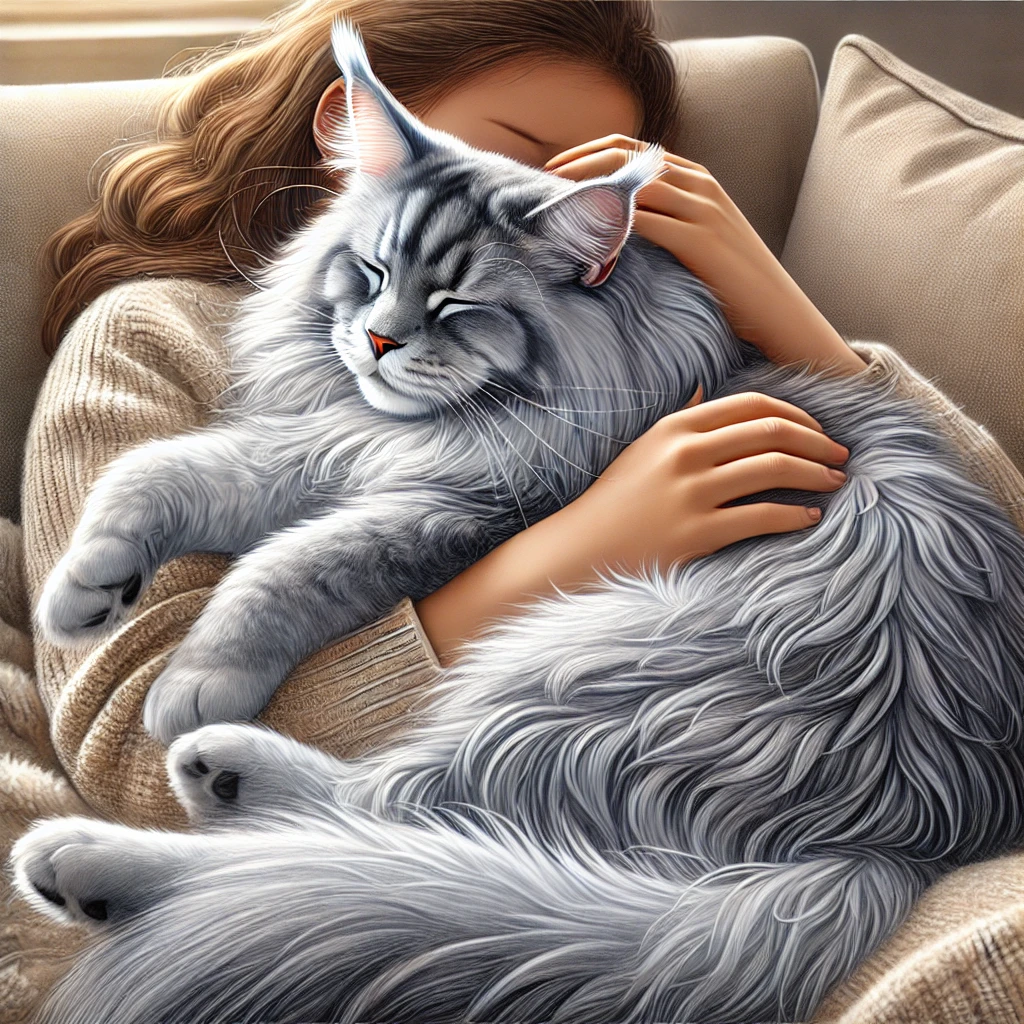
Why Maine Coons Love to Cuddle: The Affectionate Heart of This Gentle Giant
Maine Coons are more than just majestic fluffballs with striking looks—they’re heartwarming companions known for their affectionate, cuddly nature. If your Maine Coon has ever climbed into your lap, snuggled against your side, or curled up at your feet, you’ve felt their love firsthand. These moments aren’t random—they’re full of meaning and connection.
Let’s explore why Maine Coons love to cuddle and what those precious moments say about your bond with this gentle giant.

Maine Coons are more than just majestic fluffballs with striking looks—they’re heartwarming companions known for their affectionate, cuddly nature. If your Maine Coon has ever climbed into your lap, snuggled against your side, or curled up at your feet, you’ve felt their love firsthand. These moments aren’t random—they’re full of meaning and connection.
Let’s explore why Maine Coons love to cuddle and what those precious moments say about your bond with this gentle giant.
1. Instincts: Seeking Warmth, Safety, and Comfort
From their wild ancestors to their cozy lives with us, cats have always valued warmth and security. In nature, snuggling together helps conserve body heat and offers protection.
When your Maine Coon chooses you as their favorite warm spot, they’re tapping into this ancient instinct. Their impressive size and fluffy coat might suggest they’re self-sufficient, but in truth, they crave the comfort and safety you provide. Whether they’re on your lap, draped across your legs, or tucked against your chest, they’re signaling that you’re their safe haven.

2. Social Butterflies: Born for Connection
Maine Coons aren’t your typical aloof cats—they’re social butterflies who thrive on companionship. These playful giants love to be part of the action, whether it’s following you around the house, lounging nearby, or curling up for some cuddle time.
When your Maine Coon snuggles with you, they’re not just seeking physical closeness; they’re saying, “You’re my favorite human, and I love being with you.” This social nature is one of the reasons they’re so popular—they genuinely enjoy being part of your life.
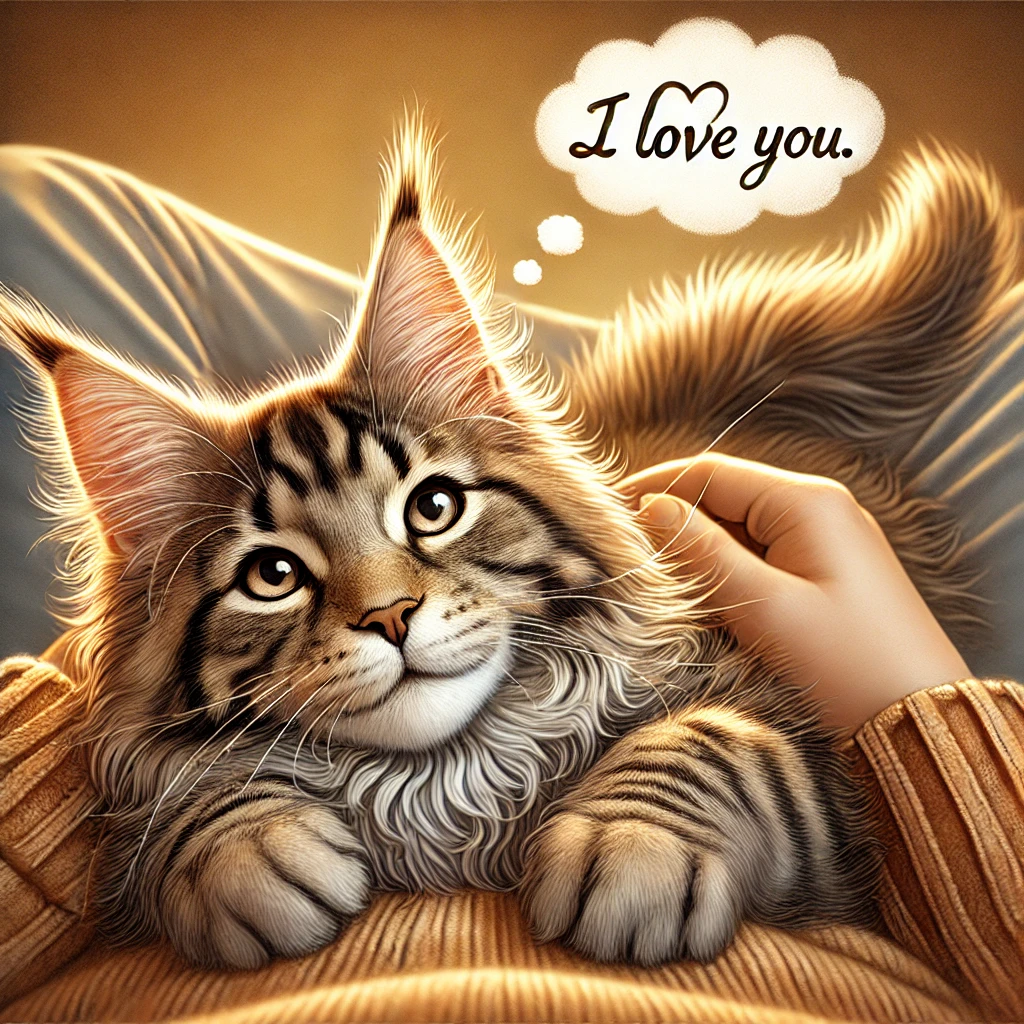
3. Cuddling = Love and Trust
Cats are naturally cautious creatures. It’s in their DNA to assess their environment for threats. That’s why when your Maine Coon cuddles with you, it’s a big deal. They’re letting their guard down completely, choosing you as their safe space.
This act of trust is their way of saying, “I feel secure with you.” It’s one of the purest forms of feline affection. When they nestle close, they’re showing vulnerability and love—two things cats don’t offer lightly.

4. Stress Relief: You’re Their Calm in a Storm
Even the confident, laid-back Maine Coon can feel stressed or overwhelmed. Whether it’s a noisy household, a trip to the vet, or just a tiring day of exploration, they turn to you for comfort.
Cuddling helps them decompress. The sound of your heartbeat, the warmth of your body, and the soothing rhythm of your breathing all reassure them that everything is okay. To your Maine Coon, you’re not just a cuddle buddy—you’re their emotional anchor.

5. Chasing Warmth: A Cozy Spot with a Side of Love
Despite their luxurious coats, Maine Coons are drawn to warmth like moths to a flame. And let’s face it—you’re the coziest, warmest thing around. Your body heat is irresistible, especially on chilly days, but it’s more than just physical warmth.
To your Maine Coon, snuggling with you is like sitting by a crackling fire—it’s a combination of comfort, love, and peace. They’re not just warming up their body; they’re soaking in the emotional warmth of being close to you.

6. A Bonding Moment Like No Other
Cuddle time isn’t just about relaxation—it’s about building and reinforcing your bond. Each snuggle strengthens your connection, creating a sense of trust and love that deepens over time.
By choosing to be close to you, your Maine Coon is expressing that they see you as family. These moments are quiet but powerful, serving as a reminder of how much you mean to them.

7. From Play to Chill: A Natural Transition
Maine Coons are playful by nature, often zooming around the house or engaging in endless games of chase. But after all that energy, they need a calm, cozy place to wind down—and what better spot than next to you?
Cuddling is the perfect way for your Maine Coon to transition from high-energy play to restful relaxation. It’s their way of saying, “Thanks for the fun—now let’s unwind together.”

Every Snuggle Is a Love Letter
When your Maine Coon cuddles with you, it’s a deeply meaningful act of love and trust. They’re not just looking for warmth or a comfy spot—they’re choosing you, their favorite human, as their safe haven.
These moments are more than just cute—they’re a testament to the unique bond you share. Each snuggle is a quiet, heartfelt love letter from your Maine Coon to you. So the next time they curl up by your side, take a moment to appreciate the connection, comfort, and joy they bring into your life.
Because when a Maine Coon cuddles, it’s not just a hug—it’s a gift.
Why Microchipping Your Cat (and Keeping Info Updated!) Is a Game Changer
Imagine this: your adventurous cat sneaks out for a grand escapade, and while you’re panicking, someone finds them miles away. Thanks to a quick scan of their microchip, you’re reunited in no time. This little device can make the difference between a brief scare and a heartbreaking loss.

Imagine this: your adventurous cat sneaks out for a grand escapade, and while you’re panicking, someone finds them miles away. Thanks to a quick scan of their microchip, you’re reunited in no time. This little device can make the difference between a brief scare and a heartbreaking loss.
Microchipping isn’t just a good idea—it’s a game changer. Collars and tags are helpful, but they’re not foolproof. Microchips offer a safe, permanent way to protect your feline friend and dramatically boost the odds of a happy reunion. Let’s dive into why microchipping is essential and how to keep it working for you.
1. What Is a Microchip, Anyway?
Think of a microchip as your cat’s invisible, high-tech ID card. It’s a tiny device, about the size of a grain of rice, that a vet inserts just under the skin between their shoulder blades.
Each chip carries a unique ID number linked to your contact details in a secure database. If your cat is found, a quick scan by a vet or shelter instantly connects them back to you. No batteries, no fuss—it’s a lifelong form of ID that works quietly in the background.

2. The Odds Are in Your Favor: Microchips Work
Here’s the stat that seals the deal: microchipped cats are up to 20 times more likely to be reunited with their owners than unchipped ones.
For indoor cats, this might sound unnecessary—but all it takes is one open door or window for them to make a break for it. Outdoor cats, with their wandering spirits, are even more at risk. Microchipping ensures your cat’s grand adventure ends with a joyful reunion, not heartbreak.

3. The Benefits of a Permanent ID
Collars and tags are great, but they can break, slip off, or become unreadable over time. A microchip, however, stays with your cat wherever they go.
It’s like a built-in name tag that can’t get lost or damaged. Whether your cat is found days, months, or even years after they go missing, the microchip ensures they’re always connected to you.

4. Peace of Mind for the Escape Artist in Your Life
Cats are natural escape artists. One minute they’re lounging on the couch, the next they’ve squeezed through a barely open window. While collars can provide some security, microchipping offers peace of mind.
Knowing your cat has a microchip means that even if they wander far, they have a way home. It’s a safety net every cat owner deserves.

5. Quick, Simple, and Safe Procedure
Worried about the process? Don’t be. Microchipping is quick and easy—it’s no more invasive than a routine vaccination.
• The vet uses a small needle to insert the chip under your cat’s skin.
• The whole procedure takes just a few minutes.
• Once it’s done, the chip is good for life.
Your cat might not even notice it happened, and the peace of mind it provides lasts forever.

6. The Importance of Keeping Your Info Updated
Here’s the catch: a microchip is only as effective as the information it holds. If your contact details are outdated, reuniting with your cat becomes much harder.
• Update After Big Changes: If you move, get a new phone number, or change email addresses, update your info in the microchip database ASAP.
• Simple to Do: Most updates can be done online or with a quick phone call to the microchip company. It’s a small task with big benefits.
Add it to your checklist whenever you move or make major life changes—it’s that easy!

7. What to Do If Your Cat Goes Missing
If your cat ever goes missing, microchipping can speed up the search:
• Alert the Microchip Company: Many companies can flag your account, notifying shelters and vets to watch for your cat.
• Share the Chip Number: Provide local shelters and vets with your cat’s microchip number to increase the odds of identification.
Your microchip isn’t just a tracking tool—it’s your cat’s lifeline.

8. Double Down with Extra Layers of ID
While a microchip is essential, combining it with other forms of identification creates an even stronger safety net:
• Breakaway Collar and ID Tag: These provide immediate identification for anyone who finds your cat. Make sure the tag includes your phone number for quick contact.
• Record Your Microchip Details: Keep a note of your cat’s microchip number and the company’s contact info somewhere handy, like your phone or a pet folder.
The more ways someone can reach you, the faster you’ll be reunited with your furry friend.
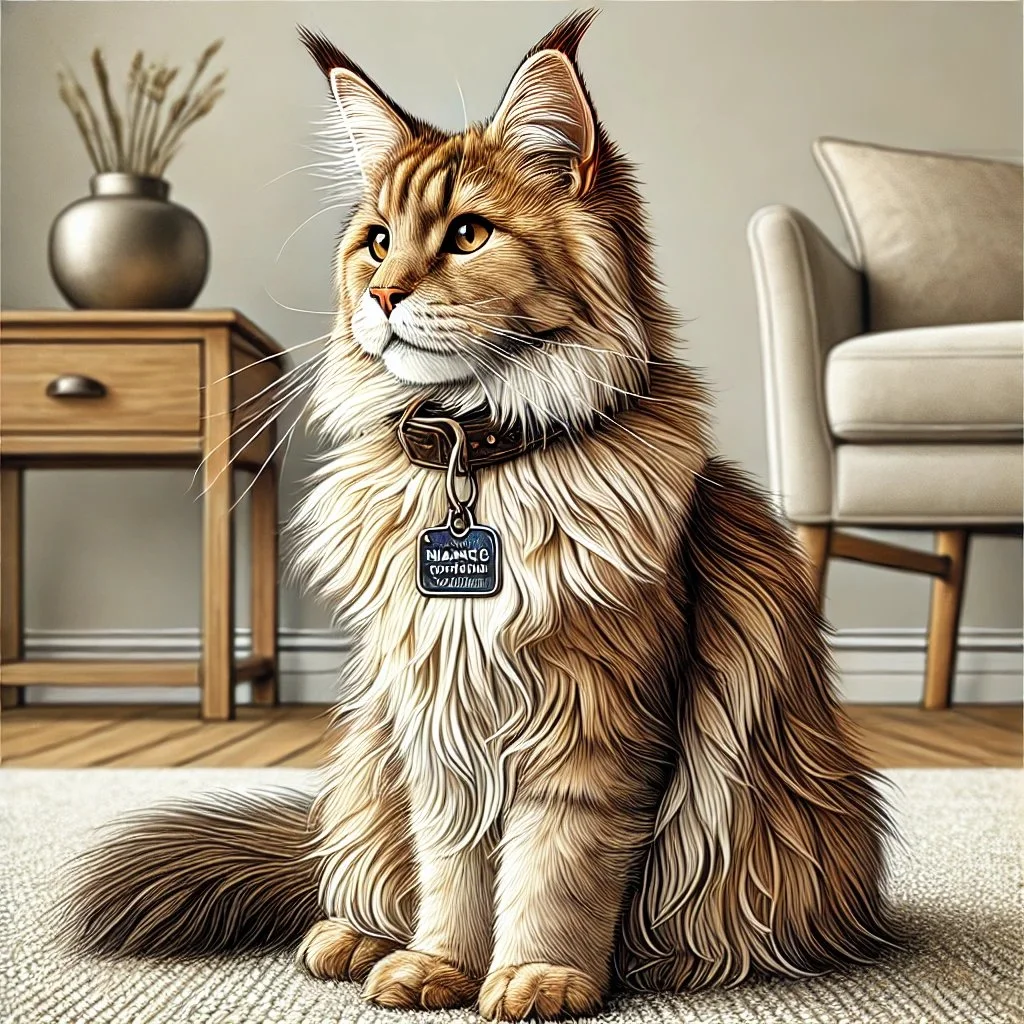
A Small Chip, a Big Difference
Microchipping your cat is one of the simplest yet most effective ways to keep them safe. It’s a tiny step with enormous benefits, offering peace of mind and a greater chance of a happy reunion if your cat ever goes missing.
Pair the chip with updated registration info, a secure collar, and an ID tag for a full-proof plan that ensures your kitty stays connected to you no matter where their curiosity leads them.
Protect your cat today with a chip—and rest easy knowing you’ve taken a big step toward keeping your beloved feline safe, sound, and by your side for years to come.
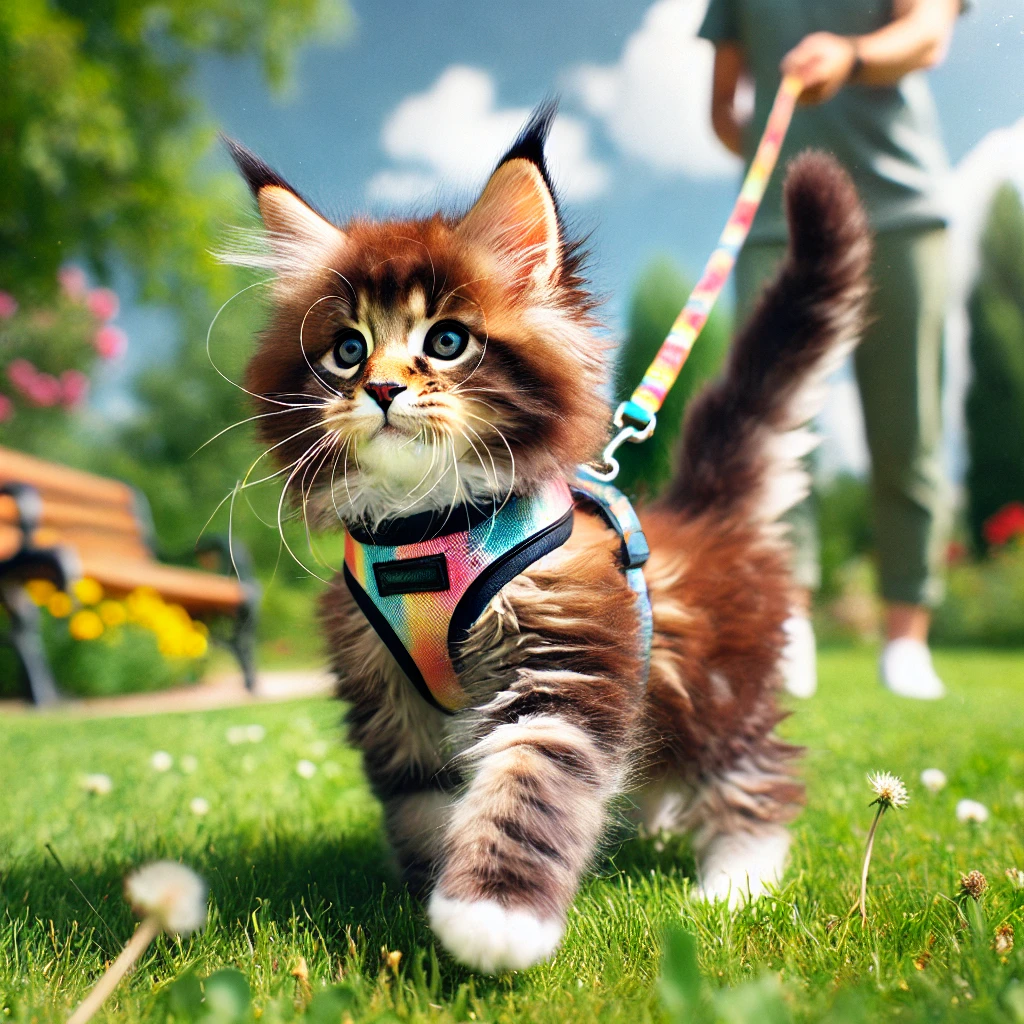
How to Leash Train Your Maine Coon: A Guide for your Adventurous Couples Furry Sidekick
Picture this: you and your partner strolling through a serene park, hand in hand, with your majestic Maine Coon padding confidently beside you. Sound dreamy? Leash training your Maine Coon can turn this fantasy into a reality, offering an incredible way to bond with your furry companion while exploring the great outdoors together. These sociable, curious giants are well-suited for adventures, and with the right training, they’ll be ready to join you on your outdoor escapades.

Picture this: you and your partner strolling through a serene park, hand in hand, with your majestic Maine Coon padding confidently beside you. Sound dreamy? Leash training your Maine Coon can turn this fantasy into a reality, offering an incredible way to bond with your furry companion while exploring the great outdoors together. These sociable, curious giants are well-suited for adventures, and with the right training, they’ll be ready to join you on your outdoor escapades.
Here’s your ultimate step-by-step guide to leash training your Maine Coon and transforming every outing into a purr-fect date for three!
1. Gear Up for Success: The Right Equipment Matters!
Your cat’s comfort and safety hinge on choosing the right gear. Think of it like buying hiking boots for yourself—fit and quality make all the difference.
• Harness: Opt for a well-fitted, escape-proof harness designed specifically for cats. An H-style or figure-eight harness is ideal for easy adjustments and maximum security.
• Leash: A lightweight, non-retractable leash (about six feet long) is perfect. It provides freedom for your cat to explore without sacrificing control.
Pro tip: Test the harness and leash indoors to ensure they fit snugly but comfortably.

2. Baby Steps: Making the Harness a Daily Ritual
Introducing your Maine Coon to their harness is like introducing them to a new friend—it takes time and trust.
• Let Them Sniff It Out: Place the harness in their favorite hangout spot. Let them explore it on their own terms.
• Start Small: Gently put the harness on indoors for a few minutes each day, gradually increasing the duration as they grow comfortable.
• Positive Reinforcement: Use treats, gentle praise, or their favorite toy to associate the harness with good vibes.
This step builds familiarity and ensures your cat feels secure before stepping outside.

3. Practice Indoors: The Training Ground of Champions
Before venturing into the big, wide world, let your Maine Coon master leash walking in a safe, familiar environment.
• Attach the Leash: Clip the leash to the harness and let your cat explore. Walk alongside them, allowing them to set the pace.
• Motivate with Rewards: Encourage them to move around with treats or toys, making leash walking a positive and fun experience.
Think of it as a dress rehearsal—perfecting the art of teamwork before the big show.

4. First Outdoor Adventures: Start Slow and Steady
When your Maine Coon feels confident indoors, it’s time to take their training outside.
• Pick a Calm Environment: A quiet backyard or a peaceful garden is ideal for their first outdoor adventure.
• Let Them Explore: Follow your cat’s lead, offering encouragement as they sniff and investigate.
• Keep It Brief: Limit the first outing to 10–15 minutes to avoid overwhelming your furry friend.
Patience is key—every step outside builds their confidence.

5. Teach Commands: Yes, Cats Can Learn!
Harness training is the perfect opportunity to introduce simple commands that can make adventures more enjoyable.
• “Sit” and “Stay”: Use treats to teach your Maine Coon to pause on command. This is handy for keeping them safe in unfamiliar areas.
• “Come”: Practice calling their name and rewarding them when they respond. It’s not just adorable—it’s practical for outdoor safety.
Cats may not be as eager to please as dogs, but Maine Coons are intelligent and love a good challenge!

6. Tune Into Their Cues: Body Language Speaks Volumes
Your Maine Coon’s body language will reveal how they’re feeling about this new adventure.
• Watch for Stress Signals: Tail flicking, flattened ears, or low crouching indicate discomfort. Pause and give them space if they seem overwhelmed.
• Adapt to Their Pace: Some cats are born explorers, while others may need more time to warm up to the experience.
The more you observe and respect their comfort level, the more confident they’ll become.

7. Build a Routine: Make It a Habit
Consistency is the secret to successful leash training and creating lasting memories together.
• Plan Regular Walks: Incorporate short outdoor sessions into your weekly routine.
• Vary the Scenery: Once they’re comfortable, explore new locations to keep them curious and engaged.
Walking together will quickly become a cherished tradition for your trio.
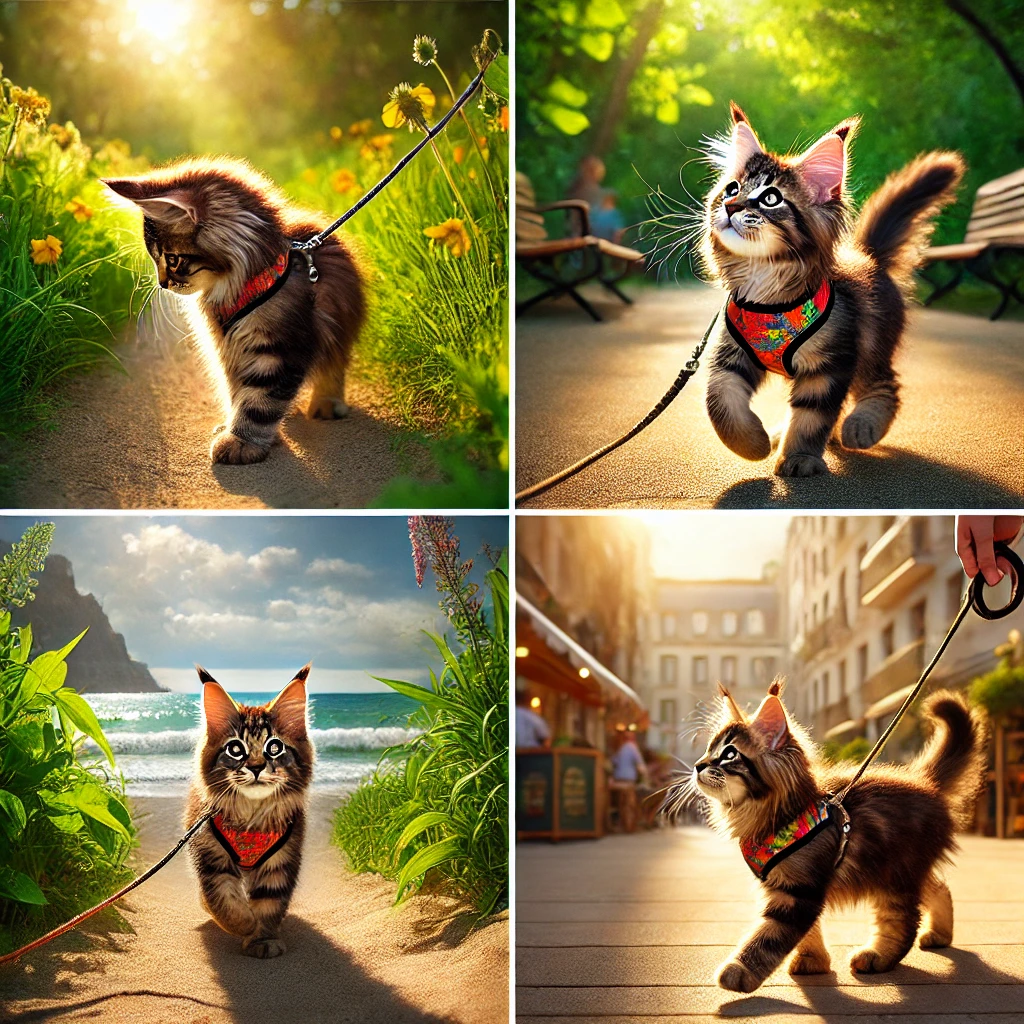
8. Prioritize Safety: It’s Always Rule #1
Exploring the world is fun, but your Maine Coon’s safety comes first.
• Stay Alert: Keep an eye out for potential hazards like other animals, loud noises, or unexpected movements.
• Double-Check Gear: Before every outing, ensure the harness is snug and secure.
Remember: You’re their safety net in a world full of surprises.

A New Way to Bond with Your Maine Coon
Leash training your Maine Coon isn’t just about exploring the outdoors—it’s about building trust, strengthening your bond, and creating unforgettable memories together. With patience, practice, and love, your furry friend can become the perfect adventure buddy.
So grab your partner, the harness, and some treats—it’s time to embrace a whole new way of spending quality time together with your Maine Coon. Whether it’s a quiet garden stroll or a trip to a nearby park, every step will bring you closer together as a family.
Ready to take the first step? Your Maine Coon is waiting to explore the world by your side!
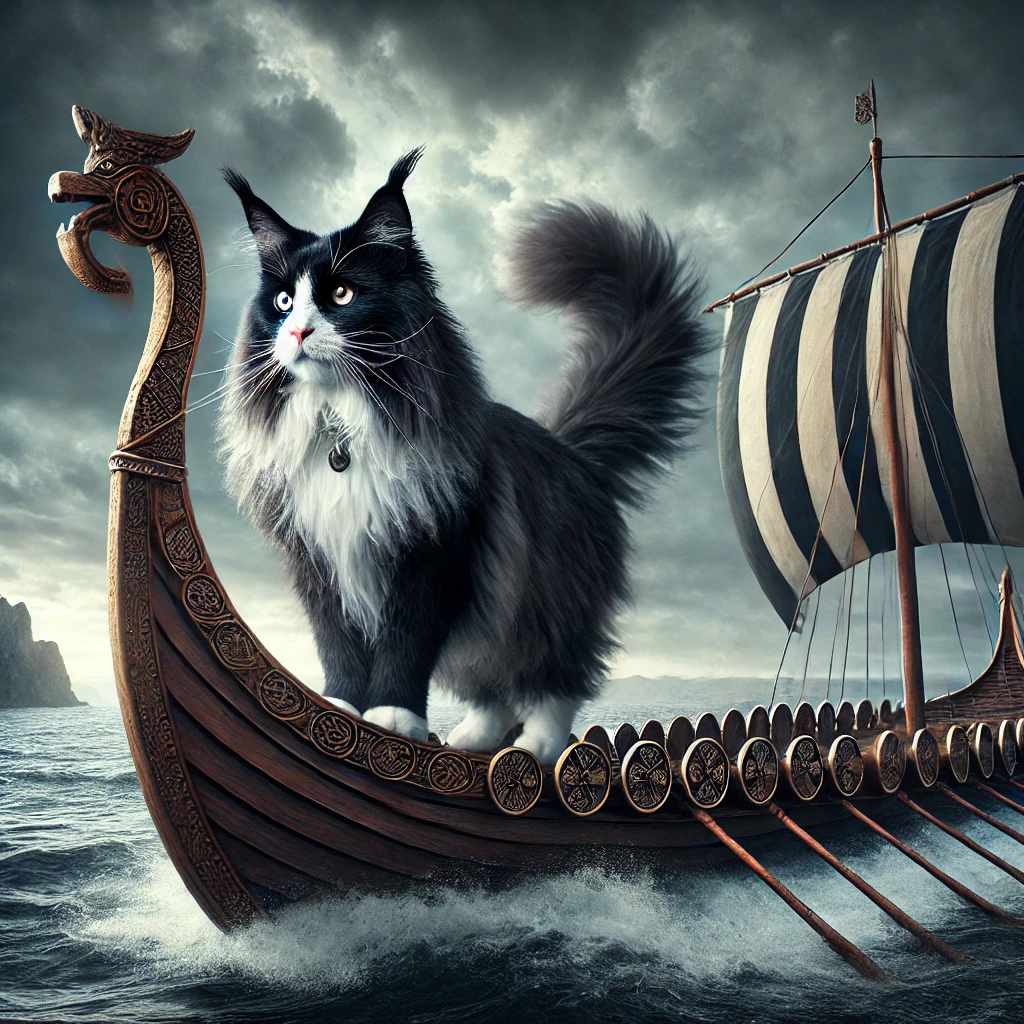
The Legendary History of Maine Coon Cats: From Ship Decks to Living Rooms

Maine Coon cats are known for their regal appearance, affectionate personalities, and playful antics. But have you ever wondered where this unique breed came from? The history of Maine Coons is a delightful mix of myth, adventure, and mystery that adds even more charm to these majestic felines. So, grab a cup of coffee, curl up with your Maine Coon (if they’ll sit still!), and dive into the tale of one of the oldest and most beloved cat breeds in North America.
The Mythical Beginnings: Vikings, Royalty, and… Raccoons?
The history of Maine Coons is cloaked in legend, and one of the most popular theories is that they descended from long-haired cats brought over by the Vikings. This might sound far-fetched, but the idea is plausible—Vikings were known to bring cats on their ships to control the rodent population. Some believe these seafaring cats, possibly Norwegian Forest Cats, interbred with local shorthair cats, resulting in the Maine Coon’s signature size and fluffy coat.

Then there’s the quirky tale involving Marie Antoinette, the French queen famous for her lavish lifestyle. According to legend, Marie Antoinette attempted to flee France during the Revolution and planned to bring along her beloved long-haired cats. Though the queen didn’t make it to America, her cats allegedly did, arriving on the coast of Maine and eventually giving rise to the Maine Coon breed.

Of course, another whimsical theory suggests that Maine Coons are the result of a romantic liaison between a domestic cat and a raccoon. While scientifically impossible, this myth persists because of the Maine Coon’s bushy tail and raccoon-like coloring!

The Working Cats of New England
Regardless of these legends, the more likely origins of Maine Coons lie in practical New England life. In the 19th century, Maine was home to numerous farmers, fishermen, and tradespeople who valued cats for their hunting skills. Maine Coons were beloved for their ability to keep barns, granaries, and homes free from pests. Their thick, water-resistant coats helped them thrive in the harsh Maine winters, while their playful and friendly nature earned them a spot by the hearth.

These hardy cats became a fixture in coastal towns and rural communities. It’s even said that Maine Coons were common “ship cats,” keeping decks rodent-free as they sailed up and down the eastern seaboard. This rugged lifestyle helped shape their muscular build, intelligence, and legendary hunting skills—traits that Maine Coons still display today.

The First American Cat Show Superstar
Maine Coons were popular well before the age of Instagram, but it was in the late 1800s that they truly became America’s darling. In 1895, a brown tabby Maine Coon named Cosey won Best in Show at the first North American cat show, held at Madison Square Garden in New York City. Cosey’s victory put Maine Coons in the spotlight, marking the beginning of their rise in popularity.

As more fancy cat breeds were introduced to the U.S., however, Maine Coons briefly fell out of favor. But true to their resilient nature, they made a comeback in the 1960s, with dedicated breeders reviving interest in this all-American cat. By 1985, the Maine Coon was named the official state cat of Maine—a long-overdue honor for the breed that has Maine’s history woven into its DNA.

What Makes a Maine Coon, a Maine Coon?
So, what exactly defines a Maine Coon? These cats are unmistakable with their tufted ears, bushy tails, and muscular, sturdy frames. Males can weigh up to 18 pounds (or even more), while females are slightly smaller but just as majestic. Their fur is thick and water-resistant, perfect for those icy Maine winters, and they come in a wide variety of colors and patterns, though the classic brown tabby remains iconic.

Beyond looks, Maine Coons are beloved for their personalities. Known as “gentle giants,” they are incredibly social and affectionate without being clingy. Maine Coons are often described as “dog-like” in their loyalty, intelligence, and playfulness. Many enjoy fetching toys, following their humans from room to room, and even “talking” in sweet chirps and trills.

Maine Coons Today: Beloved, Popular, and Adored
Today, Maine Coons are one of the most popular cat breeds worldwide, adored for their intelligence, good nature, and striking looks. They’ve become beloved companions for families, individuals, and, of course, the many fans who adore their online photos and videos. And with each fluff of the tail or curious chirp, they continue to win hearts everywhere.

Whether or not the legends of Vikings, queens, or raccoons are true, the real story of Maine Coons is one of resilience, loyalty, and love. From their humble beginnings as working cats on Maine’s farms and ships to their status as American icons, Maine Coons carry a bit of history, mystery, and Maine spirit with them wherever they go.

So the next time your Maine Coon curls up beside you or greets you with a chirp, remember—this is more than just a cat. This is a piece of history, a descendant of explorers and adventurers, and above all, a beloved friend with a story as rich and fluffy as their famous fur!
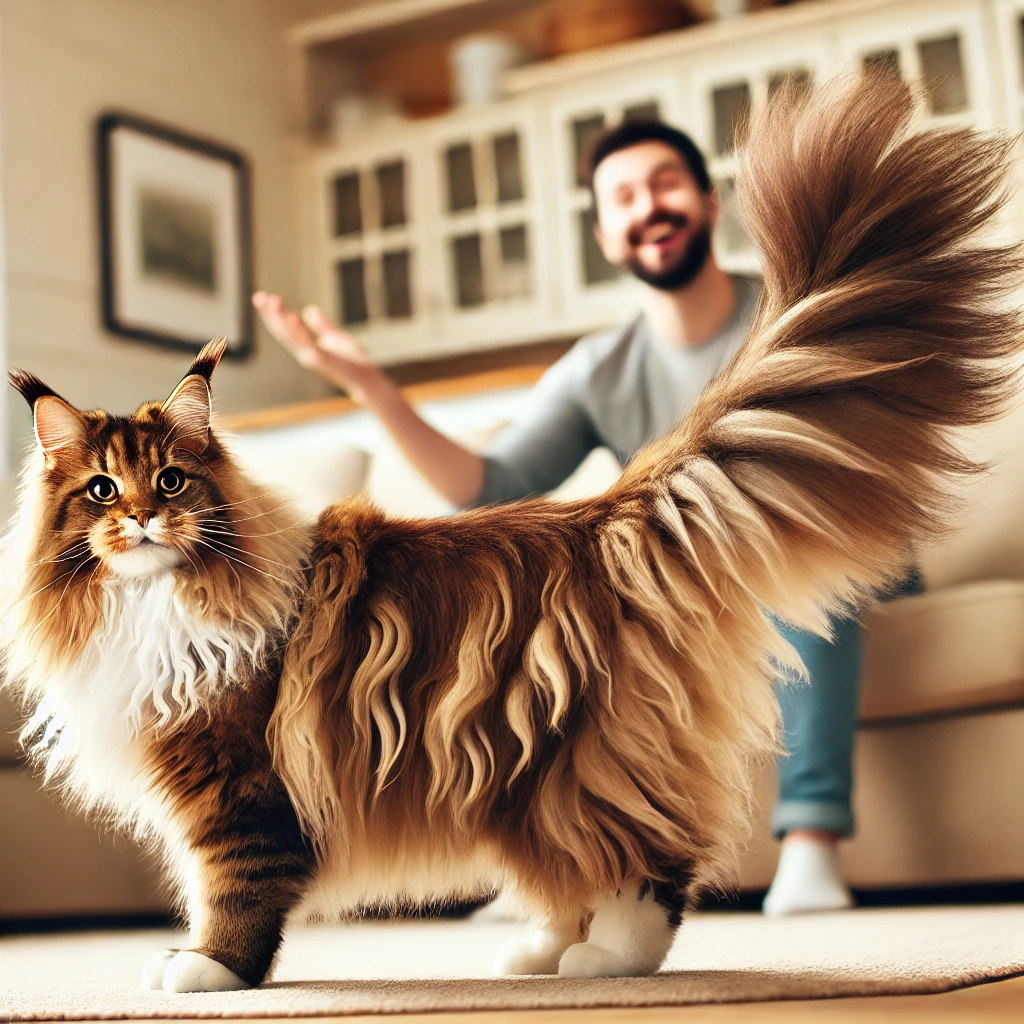
“Butt Why? The Quirky Reason Your Maine Coon Shows You Its Backside!”

If you’ve ever owned a Maine Coon—or any cat, really—you’ve probably had an encounter where your furry friend has nonchalantly turned around and shown you its butt. While it might seem odd or even rude, this behavior actually has a fascinating explanation. For Maine Coon lovers, understanding these quirks helps deepen our bond with our big, affectionate felines.
A Sign of Trust
When your Maine Coon shows you its butt, it’s a powerful sign of trust and comfort. Cats are naturally cautious and protective, especially over their more vulnerable areas, like the back and belly. In the wild, they would never expose themselves to potential threats in this way. So, when your Maine Coon turns its back on you, it’s essentially saying, “I trust you enough to let my guard down around you.” It’s a compliment, really—a bit unusual, but a sign that your kitty feels completely safe with you.

Part of Feline Communication
In the cat world, body language is everything. Cats greet each other by sniffing around their faces and hindquarters, a behavior that is almost like a handshake in human terms. By showing you its rear, your Maine Coon might be inviting you into its world of feline communication. It’s their way of extending a friendly “hello” and letting you know they feel comfortable and connected with you.

Marking Territory (In a Good Way)
Cats are territorial animals, and scent plays a major role in marking spaces and people as part of their territory. The scent glands near your cat’s tail and hindquarters release a unique scent that they may be sharing with you to signal that you’re part of their inner circle. Maine Coons, in particular, are known for their loyal and affectionate personalities, so they might be especially inclined to “claim” you with this kind of behavior.

An Invitation to Pet
Sometimes, it’s simply your Maine Coon’s way of asking for attention and affection. By showing its rear, your cat might be nudging you to pet it or give it a good scratch near the base of its tail—a spot many cats adore. Maine Coons are known for their affectionate, dog-like personalities, so don’t be surprised if they linger a bit longer, awaiting some well-deserved pets.

Respecting Feline Etiquette
As funny as it may seem, accepting this behavior without reacting negatively is a great way to strengthen your bond with your Maine Coon. They’re showing affection in their unique way, and by allowing them to do so, you’re respecting their language and creating an environment where they feel loved and secure.

Bottom Line
So, the next time your Maine Coon shows you its butt, take it as a compliment! It’s a quirky but genuine way of saying, “I feel safe and close to you.” Respond with gentle pets and affection, and enjoy the unique bond that Maine Coons offer with their loyal, loving nature.
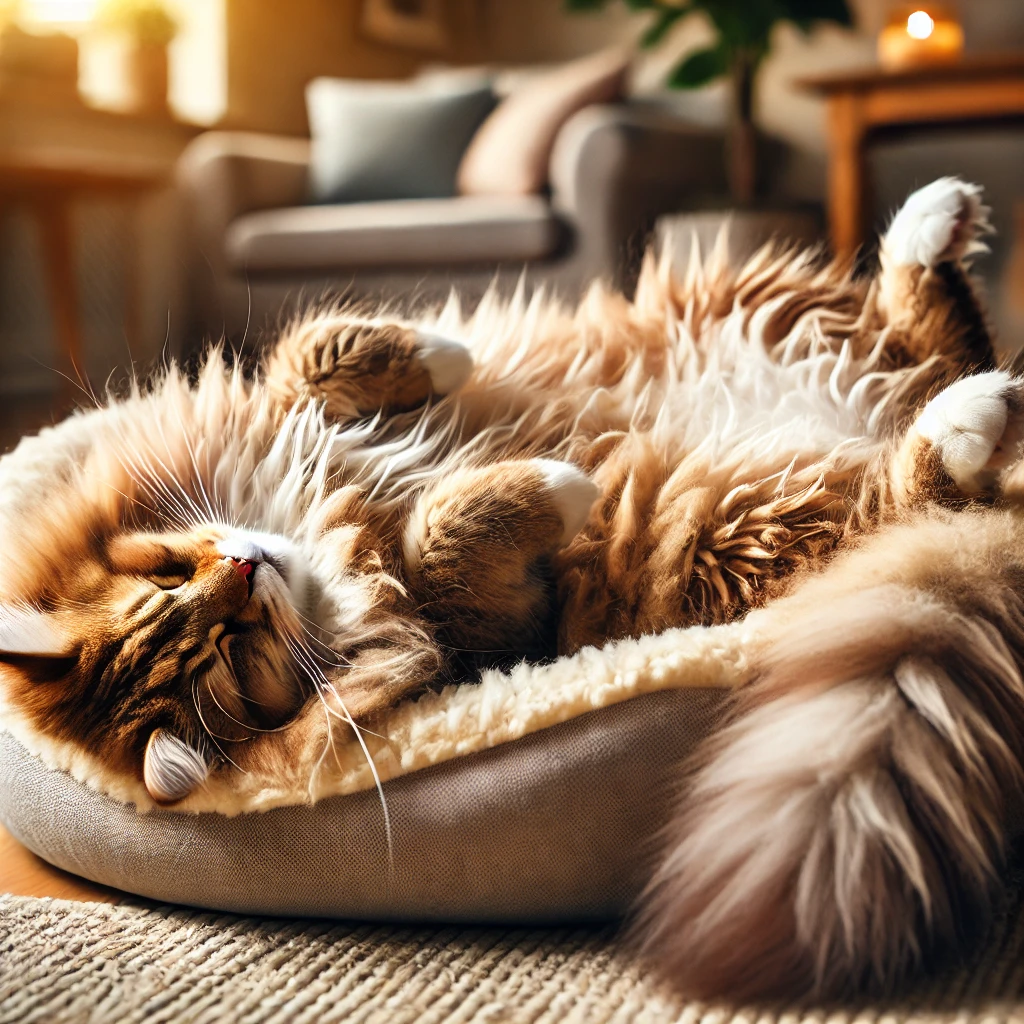
What It Means When Your Maine Coon Sleeps on Their Back (and Why It’s Just So Darn Cute)
What It Means When Your Maine Coon Sleeps on Their Back (and Why It’s Just So Darn Cute)

Maine Coons are the epitome of charm. With their majestic size, tufted ears, and expressive personalities, it’s easy to see why these “gentle giants” are beloved by cat lovers around the world. One of their most delightful quirks, though, is the way they sometimes snooze on their backs, paws in the air, belly up, looking as though they’ve settled into the ultimate state of relaxation. So, what does this adorable (and slightly comical) sleep position really mean? Let’s take a closer look at why your Maine Coon might choose to sleep like this, and what it says about their personality, mood, and overall happiness.
1. Complete Trust and Comfort: “I’m Totally Safe Here”
When a Maine Coon flops onto their back to sleep, belly exposed, it’s the ultimate sign of trust. Cats are wired to protect their bellies because it’s one of their most vulnerable areas. So, when your Maine Coon takes up the “belly up” position, they’re signaling that they feel entirely safe and secure in their environment—and, of course, with you. This is basically your Maine Coon’s way of saying, “I know I’m safe here, and I’m not worried about a thing!”
To truly appreciate this, remember that in the wild, a cat would never leave itself so exposed unless it felt completely at ease. So, consider it the highest of compliments. And maybe give them an extra treat next time as a thank you for trusting you so much!

2. Temperature Regulation: Cool Cat in the House
Maine Coons come with a thick, luxurious double coat designed to keep them warm in harsh winters. But when the temperature rises, these furry friends can get a little toasty! By lying on their backs and exposing their belly to the air, your Maine Coon is letting cool air circulate around their body, helping them maintain a comfortable temperature.
So, if you catch your Maine Coon sprawled out belly-up during a warm day, don’t be surprised! They’re just practicing a little natural “air conditioning.” It’s their way of saying, “Who needs a fan when you can just lie belly-up?”

3. The Ultimate Cat Stretch: Limber and Relaxed
Ever noticed how your Maine Coon stretches out their limbs when they’re on their back, looking like they’re reaching for invisible stars? That’s because sleeping on their back allows them to fully stretch and relax their muscles. Maine Coons are active cats, known for their love of play, climbing, and exploring, so a good stretch is a natural way for them to keep their muscles limber and maintain flexibility.
Think of it like a “cat yoga” pose—they’re basically stretching their cat “abs” and lengthening their legs in the most luxurious, relaxed way possible. It’s like they’re on their own little spa retreat, and we’re just lucky to witness it!

4. The Happy, Contented Snooze
When Maine Coons sleep on their backs, they’re often in a state of pure contentment. This pose is typically seen when a cat is relaxed, happy, and at peace. It’s especially common to spot them like this after a round of playtime, a nice meal, or a snuggle session with their favorite human.
Think of it as the Maine Coon equivalent of putting your feet up after a long day. They’re simply enjoying the moment, without a care in the world. When your Maine Coon sleeps belly-up, you can be sure they’re in a state of cat bliss.
5. The “Playful Sleep”: Embracing Their Inner Kitten
Maine Coons are notorious for their playful, kitten-like nature, even well into adulthood. Sometimes, sleeping on their back is just a continuation of this playful personality. Maybe they flopped down after chasing a feather or batting a toy mouse around, and decided to just stay put in that silly, belly-up position. It’s their way of saying, “I’m still a big kitten at heart!”
This position often signals that they’re feeling lighthearted, and might even be ready for more play when they wake up. Don’t be surprised if you catch them stretching and batting at something imaginary in their sleep—they’re probably dreaming of all the fun they’ll have when they wake up!

6. Inviting Attention (Yes, Belly Rubs Please!)
Let’s face it, Maine Coons know they’re adorable, and they know how to work it. When your Maine Coon sleeps on their back, it might just be a ploy for a little extra attention. This position could be their subtle way of saying, “Hey, how about a belly rub?” Maine Coons are known for being more tolerant of belly rubs than other breeds, so if your cat starts purring or making happy chirps when you reach out to give them a gentle scratch, you know you’ve hit the spot.
Of course, not all cats love belly rubs, so start slow and see how they respond. But if your Maine Coon enjoys it, you’ll have found a surefire way to keep them happy and feeling loved!

7. Dreaming of Great Adventures
Maine Coons are highly intelligent and curious cats. When they’re sleeping in this relaxed position, paws occasionally twitching or tail flicking, there’s a good chance they’re dreaming of all their favorite activities. Perhaps they’re on an epic adventure, chasing birds, climbing trees, or solving mysteries around the house. Maine Coons are known for having vivid dreams, so if they’re belly-up with paws gently moving, they’re likely in the midst of a grand (imaginary) quest.
Watching them dream like this is an adorable reminder that, even in sleep, these big-hearted cats are always on an adventure—one that we’ll just have to imagine from the sidelines.

8. Confidence with a Touch of Sass
Maine Coons have big personalities, and sleeping on their back with paws up is often a mix of confidence and a little bit of sass. By exposing their belly and taking up more space, they’re saying, “I own this room—and yes, I deserve the best spot to stretch out!” It’s a position that shows not just trust, but a sense of ownership and pride in their space. Maine Coons know they’re special, and this sleep position just reinforces their status as the true “king or queen” of the household.

Celebrate Your Maine Coon’s Sleepy Style
When your Maine Coon sleeps on their back, it’s not just adorable—it’s a powerful symbol of their unique personality, happiness, and comfort in your home. This position reflects a relaxed, content cat who feels safe, loved, and ready to share every quirky, wonderful part of themselves with you. So, next time you see your Maine Coon napping belly-up, take a moment to appreciate the adorable trust they’re showing you.
And maybe, if you’re lucky, they’ll let you in on a gentle belly rub, a peek into their dream world, or just a reminder of how special they are—no fancy tricks, just pure Maine Coon charm.
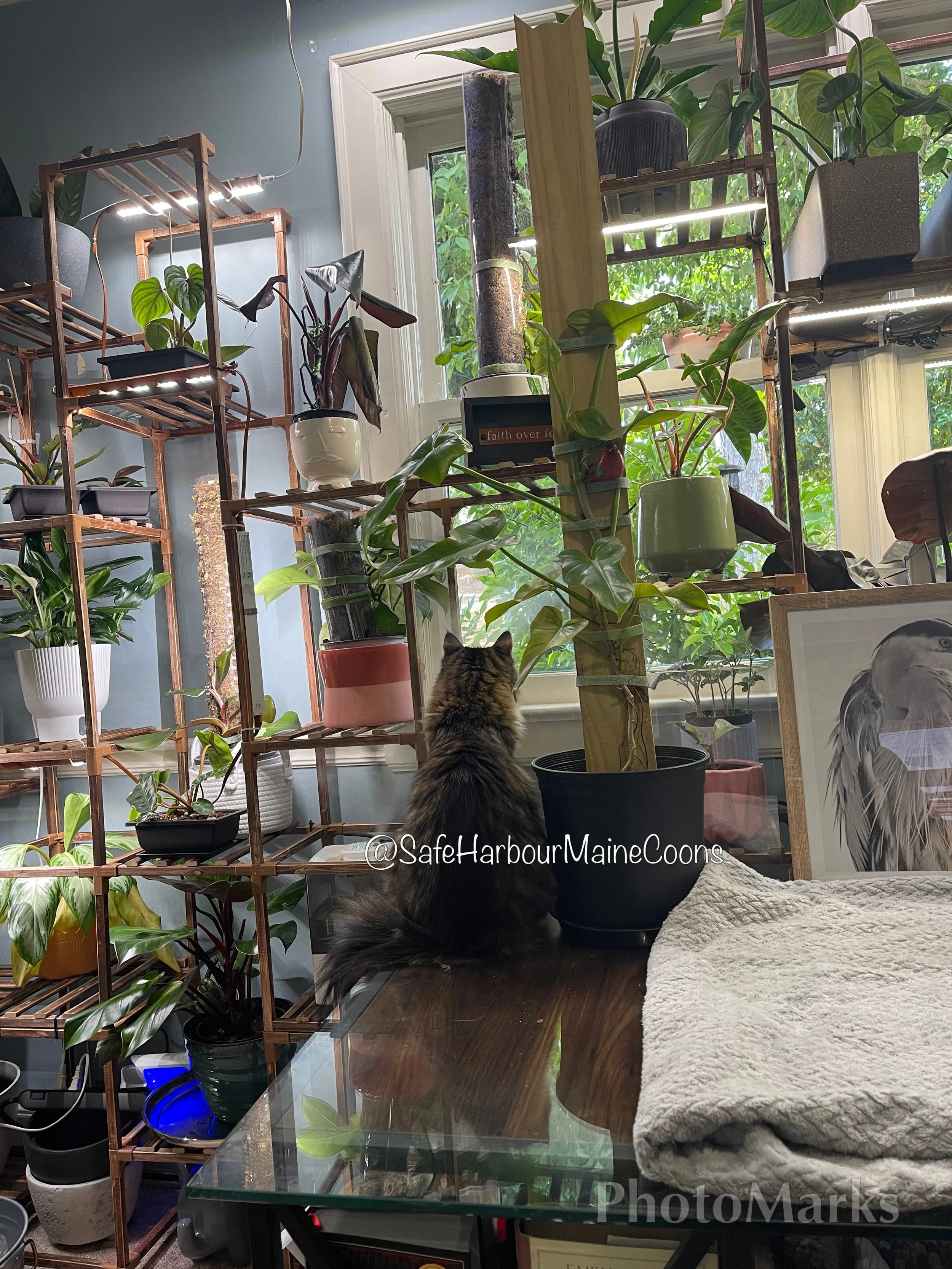
A Guide to Cat-Safe Houseplants
Cats and plants can bring life and beauty to your home—but some plants can pose risks to your furry friend. Here’s how to create a harmonious, cat-safe green space you can both enjoy.

Cats and plants can bring life and beauty to your home—but some plants can pose risks to your furry friend. Here’s how to create a harmonious, cat-safe green space you can both enjoy.
1. Choose Cat-Friendly Plants
Start by picking plants that are safe for cats! Here are a few lovely, low-maintenance options:
• Spider Plant: Hardy and air-purifying, ideal for pet-friendly homes.
• Boston Fern: Adds lush greenery, loves humidity, and is gentle on cats.
• Bamboo Palm: A tropical vibe with air-purifying benefits.
• Areca Palm: Bright and breezy without any feline dangers.
• Calathea: Gorgeous leaves and completely cat-safe.
Always research any new plant before bringing it home.
2. Know the No-Go Plants
Some plants are highly toxic to cats and should be avoided:
• Lilies: Extremely toxic—even small amounts can be harmful.
• Sago Palm: Can be fatal if ingested.
• Philodendron & Pothos: Known to cause mouth irritation and digestive issues.
• Aloe Vera: Helpful for humans, but can upset cats’ tummies.
If in doubt, leave it out!
3. Set Boundaries for Your Greenery
Cats love to explore, so keeping plants out of reach is key:
• Elevate Plants: Use shelves, hanging planters, or high surfaces.
• Add Stands & Barriers: Stylish plant stands or screens add height and style while keeping plants away from curious paws.
4. Provide Safe Alternatives
Cats sometimes chew on plants to satisfy their instincts. Offer them safe options like:
• Cat Grass: Safe to munch on and aids digestion.
• Catnip: Plant catnip in a designated area to satisfy playful impulses.
5. Watch Your Cat’s Plant Play
Keep an eye on how your cat interacts with plants. If they start chewing, redirect them to toys or safe plants.
6. Share the Knowledge
Make sure everyone in the house knows which plants are safe and which aren’t. This will help prevent accidents.
7. Know the Signs of Plant Poisoning
Even with precautions, accidents happen. Watch for signs like:
• Vomiting or diarrhea
• Lethargy or loss of appetite
• Excessive drooling
If you suspect your cat has ingested a toxic plant, contact your vet immediately.
Creating a safe, green haven for you and your cat is all about balance. By choosing cat-friendly plants and setting up safe spaces, you can enjoy the beauty of a plant-filled home without compromising your pet’s safety.
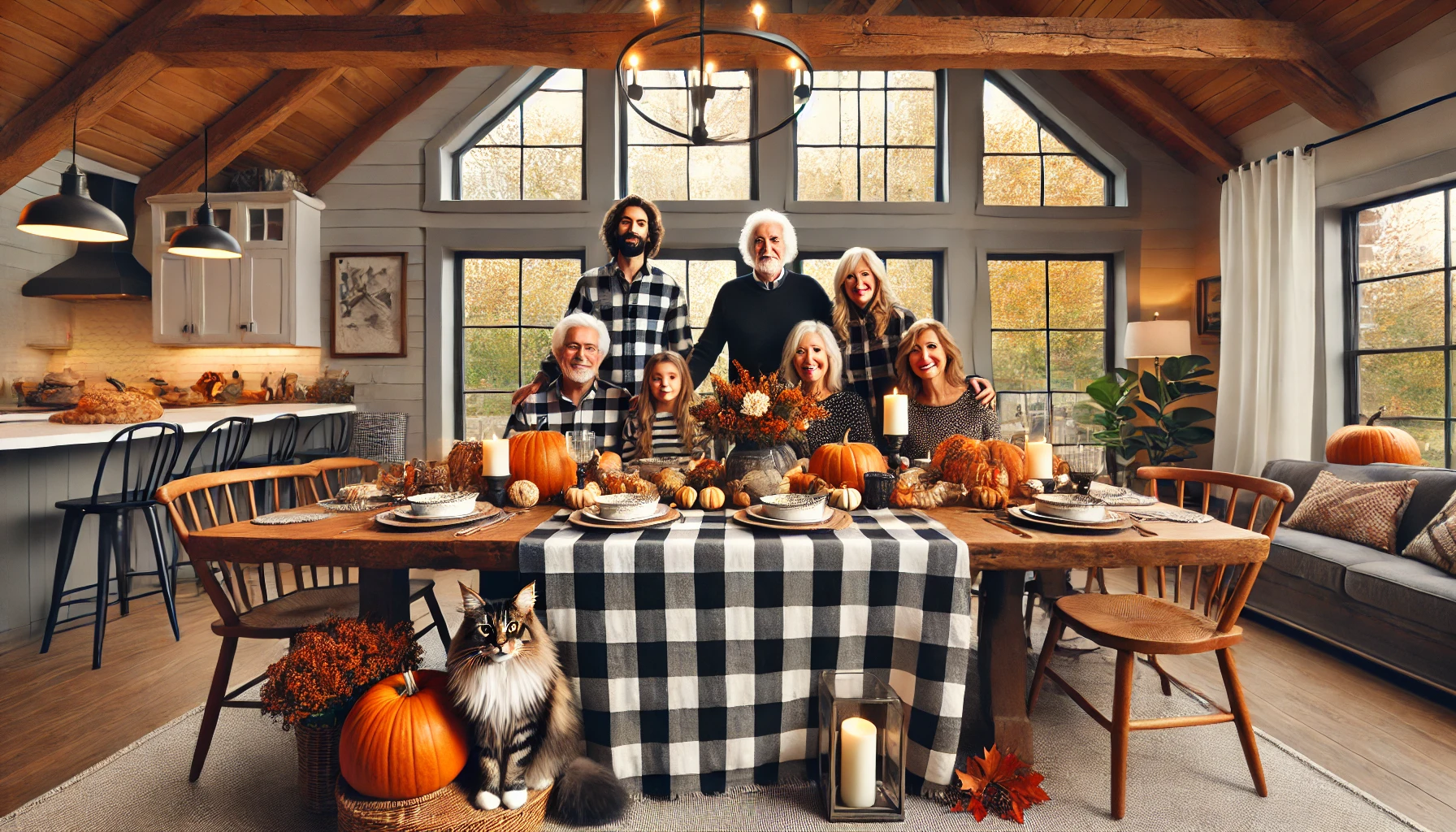
Hidden Hazards to Avoid on Thanksgiving When You Have Maine Coon Cats (or Any Cats)
Thanksgiving is a time for family, food, and festivity, but it can also be a minefield of potential hazards for your feline friends. Maine Coon cats, known for their curious and playful nature, may be even more likely to explore areas they shouldn’t. From dangerous foods to household décor, here’s how to keep your cats safe this Thanksgiving.
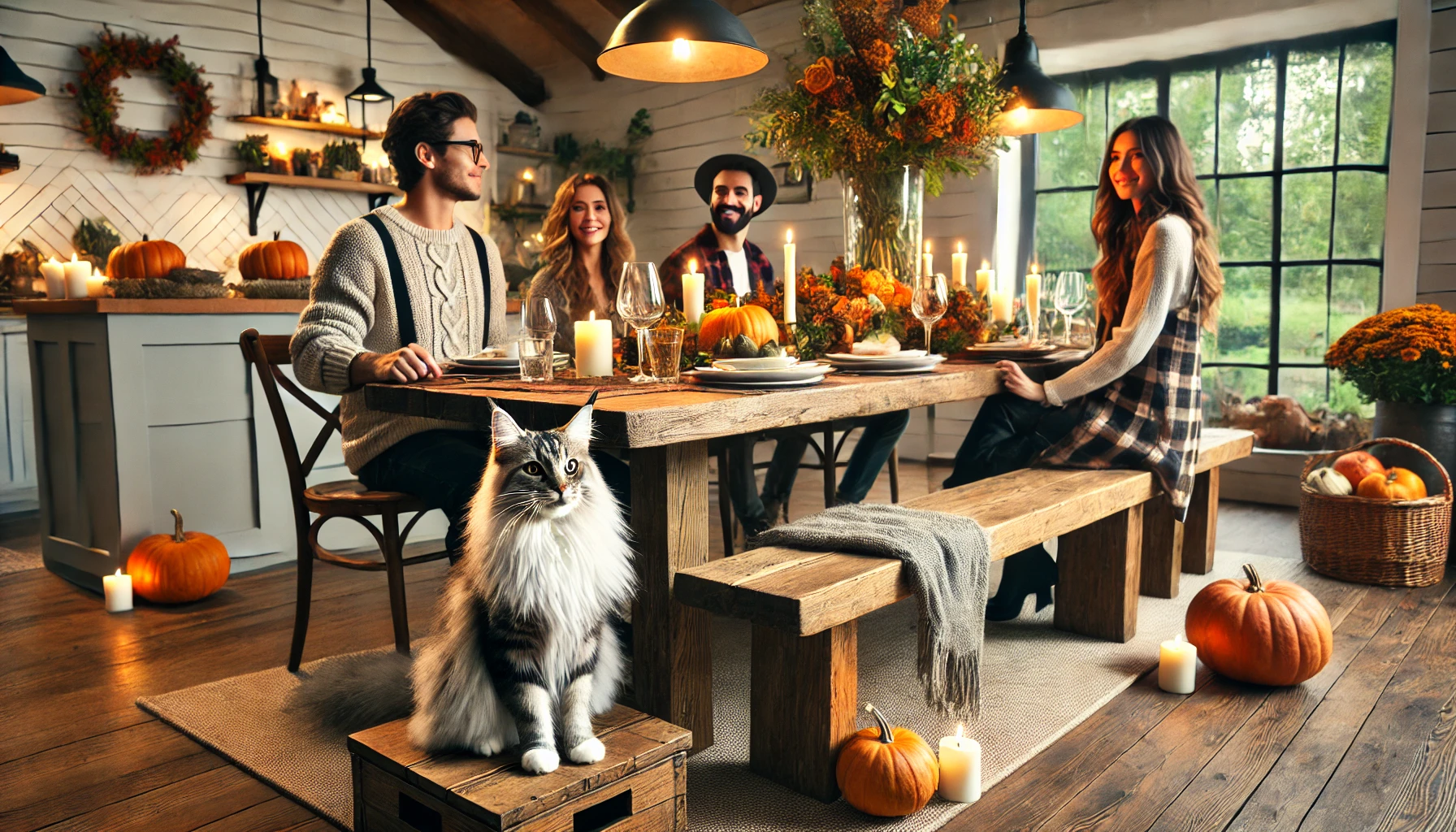
Thanksgiving is a time for family, food, and festivity, but it can also be a minefield of potential hazards for your feline friends. Maine Coon cats, known for their curious and playful nature, may be even more likely to explore areas they shouldn’t. From dangerous foods to household décor, here’s how to keep your cats safe this Thanksgiving.
1. Toxic Thanksgiving Foods
Your Maine Coon’s irresistible charm might tempt you to share your feast, but many Thanksgiving staples are harmful—or even toxic—for cats. Keep these off their menu:
• Turkey Bones and Skin: While plain, cooked turkey meat is safe in moderation, bones can splinter and cause choking or internal injuries, and skin can be too fatty, leading to pancreatitis.
• Stuffing and Seasonings: Stuffing often contains garlic, onions, and other herbs or spices that are toxic to cats.
• Gravy: Gravy is high in fat and salt, which can upset your cat’s digestive system.
• Mashed Potatoes: If they contain butter, cream, or garlic, they’re a no-go for cats.
• Desserts: Chocolate, artificial sweeteners (like xylitol), and alcohol found in many Thanksgiving desserts can be extremely toxic to cats.
Instead, consider preparing a small, plain piece of cooked turkey as a special treat, free of seasoning and sauces.

2. Decorations and Table Settings
Festive decorations can pose unexpected risks to your Maine Coon. Watch out for:
• Candles: Curious cats may swat at open flames, risking burns or starting a fire. Use flameless LED candles for a safer alternative.
• Tablecloths and Runners: A playful tug could send hot food, heavy dishes, or candles crashing to the floor. Secure table linens to avoid accidents.
• Seasonal Plants: Common Thanksgiving plants like chrysanthemums, amaryllis, and lilies are toxic to cats if ingested. Keep these out of reach or opt for cat-safe alternatives.

3. Garbage and Food Scraps
Overflowing trash cans are like treasure chests to an adventurous Maine Coon. However, they can contain dangerous items such as:
• Turkey bones
• Plastic wrap or aluminum foil (which can cause blockages if ingested)
• String from turkey trussing
• Food scraps containing toxic ingredients
Make sure trash bags are securely tied, and garbage cans have tight-fitting lids to prevent rummaging.

4. Guest Hazards
Thanksgiving often means a full house, and while your Maine Coon may enjoy the extra attention, guests can unknowingly create risks:
• Open Doors: With guests coming and going, there’s a higher chance your cat could slip outside. Consider setting up a quiet, secure room where your cat can retreat during the festivities.
• Dropped Food: Children or unaware guests may accidentally drop or feed unsafe foods to your cat. Politely remind everyone not to share their plates with your furry friend.
• Stress and Overstimulation: Maine Coons are social, but even they can feel overwhelmed by too much noise or activity. Make sure they have a calm space to relax away from the chaos.

5. Holiday Kitchen Safety
The kitchen is the heart of Thanksgiving, but it’s also full of dangers for curious cats:
• Hot Surfaces: Cats may jump onto countertops where hot pans or dishes are resting. Keep hot items away from the edges and monitor your cat closely.
• Sharp Objects: Knives, peelers, and other sharp tools should be kept out of reach, as cats may paw at or knock them off counters.
• Spills: Clean up any spills promptly, especially if they involve grease or harmful foods.

6. Alcohol and Beverages
Be vigilant about keeping alcohol away from your Maine Coon. Even small amounts of alcohol can cause vomiting, diarrhea, or more severe issues like respiratory failure. Similarly, keep coffee, tea, and other caffeinated drinks out of reach, as these can be toxic to cats.

7. Stringy Hazards from Decorations
Maine Coons are known for their playful, mischievous behavior, and shiny or dangling decorations can be especially tempting. Watch out for:
• Tinsel and Ribbons: If ingested, these can cause serious intestinal blockages.
• Twine or String: Used for cooking or decorating, these are dangerous for the same reason.
Dispose of stringy materials immediately after use, and keep an eye on any gift-wrapping or decorative displays.

How to Keep Your Cat Safe This Thanksgiving
• Secure a Safe Space: Create a quiet, comfortable space with food, water, and a litter box where your cat can retreat if they feel overwhelmed.
• Educate Guests: Let your guests know which foods are off-limits for your cat and how to safely interact with them.
• Supervise and Distract: Keep an eye on your Maine Coon during busy moments and provide toys or cat-safe treats to keep them occupied.

Conclusion
Thanksgiving is a time to be grateful for the loved ones in your life—including your Maine Coon! By staying aware of these hidden hazards, you can ensure your cat stays safe and happy during the holiday. With a little preparation and care, you and your feline friend can enjoy a festive, worry-free Thanksgiving.
From all of us at Safe Harbour, have a happy and safe Thanksgiving with your furry family members!
Why Pets Are Great for Kids—Especially Maine Coon Cats!
There’s something magical about the bond between kids and their pets. Whether it’s a playful puppy, a loyal lizard, or a curious cat, pets bring joy, learning, and companionship to children in a unique way. And when it comes to cats, Maine Coons are a fantastic choice for families with kids. Known as “gentle giants,” Maine Coons are affectionate, playful, and friendly, making them ideal pets for children. Here’s a closer look at why pets, especially Maine Coons, are wonderful additions to any family with kids.

There’s something magical about the bond between kids and their pets. Whether it’s a playful puppy, a loyal lizard, or a curious cat, pets bring joy, learning, and companionship to children in a unique way. And when it comes to cats, Maine Coons are a fantastic choice for families with kids. Known as “gentle giants,” Maine Coons are affectionate, playful, and friendly, making them ideal pets for children. Here’s a closer look at why pets, especially Maine Coons, are wonderful additions to any family with kids.
1. Teaches Responsibility in a Fun Way
Having a pet helps children learn responsibility, a vital life skill they’ll carry with them forever. By helping feed, groom, and care for a Maine Coon, kids get hands-on experience in looking after another living being. And with their social nature, Maine Coons often enjoy these routines, making it easier for kids to take part. From filling the water bowl to brushing that thick, beautiful coat, kids develop routines that teach them the importance of caring for others.

2. Provides Emotional Support and Companionship
Pets are incredible companions, and Maine Coons are known for their loving, dog-like loyalty. They form strong bonds with their human families and are often described as “gentle giants” who adore spending time with their favorite people. For children, this companionship can be a great source of comfort, especially during stressful times. Maine Coons are also sensitive to their family’s emotions, often seeking out a snuggle or a “chat” (in the form of their famous chirps) when they sense someone needs extra love.

3. Builds Confidence and Social Skills
Kids who grow up with pets often develop greater confidence and social skills. Interacting with a pet like a Maine Coon helps kids learn how to communicate, set boundaries, and interpret body language—skills that are also valuable in their interactions with people. Maine Coons, with their social and playful personalities, make wonderful playmates for kids, and the positive reinforcement they provide through purrs and cuddles can help children feel more secure and confident.

4. Encourages Physical Activity and Play
While Maine Coons may not need daily walks like dogs, they are highly active cats who love playtime! They’re known for their love of interactive play, whether it’s chasing a feather toy, batting at a ball, or even playing fetch (yes, some Maine Coons fetch like dogs!). Playing with a Maine Coon encourages kids to be more active, and it’s a great way for them to burn off energy. Kids and cats alike benefit from the bonding, movement, and joy of playtime together.

5. Sparks Curiosity and Teaches About Nature
Maine Coons have an undeniable connection to nature, with their thick coats and rugged looks that harken back to their adventurous origins in Maine. For kids, learning about their pet’s habits, needs, and instincts can spark curiosity and an appreciation for nature. They might wonder why Maine Coons have tufted ears or why they’re so fascinated with water (Maine Coons often have a love for water that most cats lack!). This curiosity can extend to learning about animal behavior, biology, and the natural world in a fun and personal way.

6. Reduces Stress and Boosts Mood
Studies have shown that pets can reduce stress and improve mood, and Maine Coons, with their calm, loving demeanor, are especially good at this. Just petting a Maine Coon’s soft fur or hearing its gentle purr can have a calming effect. When kids come home from a long day of school, their Maine Coon can be a comforting presence, ready to snuggle up or play. This stress relief isn’t just for kids, either—pets help the entire family feel happier and more relaxed!

7. Teaches Empathy and Compassion
Caring for a pet teaches children to think about others’ needs and emotions, building empathy and compassion. Watching over their Maine Coon, understanding when it needs space or when it wants attention, helps kids tune in to non-verbal cues. This understanding of others’ needs translates into kindness, patience, and emotional awareness that will benefit them throughout their lives.

8. A Special Friendship That Lasts a Lifetime
The bond between a child and a pet is unforgettable. Maine Coons have long lifespans, often living up to 15 years or more, which means they can be a lifelong companion through a child’s formative years. From the toddler years to teenage milestones, a Maine Coon cat can be a constant source of joy, comfort, and companionship. The memories and experiences shared with a pet like a Maine Coon leave a lasting impact on a child’s life, creating a legacy of love and happiness.

Why Maine Coons Are an Ideal Choice
Maine Coons have all the qualities that make them especially well-suited for families with kids. They’re gentle, social, playful, and very patient with children. Their size and durability make them a good fit for households where kids might want to engage in gentle play and games. Plus, Maine Coons are known for being relatively low-maintenance in terms of temperament; they’re adaptable and easygoing, fitting well into most family dynamics.
The Joy of Growing Up with a Maine Coon
For families considering a pet for their kids, a Maine Coon is a fantastic choice. These cats bring endless love, entertainment, and companionship to a child’s life, while also teaching invaluable life lessons in responsibility, compassion, and confidence. The joy of having a Maine Coon around adds a special magic to childhood that both kids and parents cherish.
Whether it’s playtime, cuddle time, or simply having a loyal friend by their side, kids with Maine Coons experience a unique friendship and love that helps them grow, learn, and smile every single day.
Common Mistakes New Maine Coon Parents Make (And How to Avoid Them!)
Congratulations! You’ve brought home a Maine Coon—one of the most majestic, affectionate, and playful cat breeds out there. With their fluffy coats, bushy tails, and dog-like personalities, it’s no wonder Maine Coons win hearts so quickly. But owning one of these gentle giants comes with its own set of unique challenges. As with any pet, there are a few rookie mistakes that new Maine Coon parents tend to make. Here’s a lighthearted guide to help you navigate the early days, so you can focus on what’s most important: enjoying your wonderful, fluffy new friend!

Congratulations! You’ve brought home a Maine Coon—one of the most majestic, affectionate, and playful cat breeds out there. With their fluffy coats, bushy tails, and dog-like personalities, it’s no wonder Maine Coons win hearts so quickly. But owning one of these gentle giants comes with its own set of unique challenges. As with any pet, there are a few rookie mistakes that new Maine Coon parents tend to make. Here’s a lighthearted guide to help you navigate the early days, so you can focus on what’s most important: enjoying your wonderful, fluffy new friend!
1. Underestimating Their Size (and Their Appetite!)
One of the first things new Maine Coon parents realize is that these cats grow—and grow, and grow! Maine Coons are one of the largest domestic cat breeds, with males often weighing between 15 to 18 pounds (and some even topping 20 pounds). If you thought you’d be buying a cute little cat bed and a small bag of kibble, think again!
Avoid the Mistake: Invest in a larger cat bed and durable, sturdy food and water bowls from the get-go. Be ready to buy high-quality cat food because Maine Coons need proper nutrition to support their large frames and active lifestyles. And, trust us—those tiny, cute scratching posts? They won’t cut it. Get a heavy-duty scratching post or cat tree that can handle your Maine Coon’s mighty paws.

2. Forgetting the Grooming Routine
Maine Coons have a luxurious double coat that’s as beautiful as it is high-maintenance. A common mistake is assuming that your Maine Coon’s coat will stay tangle-free without regular brushing. But that gorgeous mane can quickly turn into a tangled mess if left unattended, especially in areas like the belly and under the legs.
Avoid the Mistake: Make grooming a fun, regular part of your routine. Aim to brush your Maine Coon a few times a week to prevent mats and tangles. Many Maine Coons actually enjoy grooming sessions if they’re introduced to it early, so try different brushes to find one your cat likes. Not only will it keep their coat healthy, but it’s also a great way to bond with your fluffy friend!

3. Ignoring the “Water Obsession”
Unlike most cats, Maine Coons often love water. Many Maine Coon parents are initially shocked to find their new kitty dipping paws in the water bowl, splashing in the sink, or even trying to join them in the shower. Some Maine Coons are downright fascinated with faucets and flowing water, and they might end up making a wet mess in the bathroom or kitchen.
Avoid the Mistake: Lean into the water-loving quirk! Consider investing in a cat water fountain, which many Maine Coons find irresistible. It’s also a good way to encourage them to drink more water, which is great for their health. Just be prepared for a bit of splash play—towels nearby are a good idea!

4. Expecting a “Lap Cat” Right Away
Despite their affectionate and friendly nature, Maine Coons aren’t always the type to immediately settle in your lap and cuddle. Some Maine Coons prefer to stay close by without necessarily being on top of you. This can be confusing for new owners who were hoping for a lap cat but find their Maine Coon hanging out just beside them instead.
Avoid the Mistake: Give your Maine Coon time to warm up to you on their terms. They’re incredibly loyal and loving, but sometimes they need a little space. Respect their independence, and you’ll find that your Maine Coon will become incredibly affectionate in their own unique way. And who knows? They might just surprise you one day by curling up on your lap when you least expect it.

5. Not Realizing How Social They Are
Maine Coons are famously dog-like, and they love being part of the action. If you’re used to independent cats who do their own thing, you might be surprised by how much your Maine Coon wants to be around you. Leaving them alone for long periods without any stimulation can lead to a bored, unhappy cat.
Avoid the Mistake: Make time for play and interaction each day. Maine Coons love games of fetch, interactive toys, and anything that gets them moving. They’re also incredibly social and can do well with other pets, so consider adding another pet to the household if you’re frequently away. Your Maine Coon will thank you for it!

6. Skipping the Litter Box Upgrade
With a large cat comes the need for a large litter box! New Maine Coon parents often don’t realize that a standard-size litter box can be cramped for these gentle giants. Not only is this uncomfortable for the cat, but it can lead to litter box “issues” you’d rather avoid.
Avoid the Mistake: Get an oversized litter box that gives your Maine Coon plenty of room to move around. Some Maine Coon owners even use storage bins as litter boxes to provide extra space. Trust us—it’s worth it for both you and your cat!

7. Underestimating Their Energy Level
Maine Coons are playful and intelligent cats with a surprising amount of energy. If you don’t give them enough stimulation, they might create their own fun—like knocking over your decorations, chasing shadows, or zooming through the house at 2 a.m.
Avoid the Mistake: Stock up on toys, puzzles, and interactive play options. Maine Coons love a challenge, so consider rotating toys to keep things interesting. They’re also known for their love of climbing, so a sturdy cat tree or shelving is a must. A well-exercised Maine Coon is a happy Maine Coon!

8. Forgetting to Embrace Their Quirky Side
Maine Coons are known for their unique personalities. Some chirp instead of meow, others like to follow you around the house, and a few might even fetch. Each Maine Coon has its own distinct set of quirks, and new owners sometimes forget to appreciate these traits.
Avoid the Mistake: Embrace your Maine Coon’s quirky behavior! Whether it’s chirping, “helping” with chores, or even sitting on top of the fridge, each little habit is part of what makes Maine Coons so endearing. Celebrate their personality and enjoy the laughs—they’re sure to keep you entertained.

9. Not Knowing How Vocal They Are
Maine Coons are known for their sweet, chirpy voices, but they aren’t always quiet! Many Maine Coon parents are taken aback by how vocal these cats can be. They might “talk” to you, greet you at the door with a meow, or announce when they’re ready to play.
Avoid the Mistake: Embrace the conversation! Maine Coons are social cats, and many love “talking” with their humans. They’ll often respond if you meow back or say their name. It’s all part of their charm, and it’s a fun way to bond with your kitty.

The Joy of Life with a Maine Coon
While they come with some unique needs, Maine Coons are among the most rewarding and entertaining companions you could ask for. Avoid these common mistakes, lean into their quirky personality, and you’ll find that life with a Maine Coon is full of love, laughter, and plenty of “help” around the house. Enjoy the adventure—it’s one big, fluffy, wonderful ride!

Decoding Your Cat’s Affection - Why Maine Coons Brush Up Against You
Maine Coons are famous for their loving personalities and unique ways of showing affection. One of the most heartwarming gestures is when they brush up against you, a behavior that leaves many owners curious about its meaning. If your Maine Coon often greets you with gentle nudges, here’s what it really means and why it’s a special part of feline communication.

Maine Coons are famous for their loving personalities and unique ways of showing affection. One of the most heartwarming gestures is when they brush up against you, a behavior that leaves many owners curious about its meaning. If your Maine Coon often greets you with gentle nudges, here’s what it really means and why it’s a special part of feline communication.
1. Marking Their Territory—You’re Part of Their World
When your Maine Coon brushes up against you, they’re not just saying “hi”—they’re actually marking you as part of their territory. Cats have scent glands around their faces, paws, and tails. By rubbing against you, they’re transferring their scent to you, which is a way of claiming you as their own. It’s like a silent but powerful message to other animals: “This human is mine!”

2. A Furry Love Language
Rubbing against you is one of the clearest signs of affection. Maine Coons are known for their friendly, social nature, and brushing up against you shows they feel safe and happy. It’s like their version of a hug, letting you know they trust and care for you. Next time they give you a gentle nudge, recognize it as a gesture of love and contentment.

3. “Hey, Look at Me!”—Seeking Your Attention
Maine Coons have a playful, outgoing side and brushing against you can be a polite way of asking for attention. Maybe they want a pet, a play session, or just a cozy spot by your side. This behavior can be their way of reminding you to take a break from whatever you’re doing and give them some quality time!

4. The Language of Needs
Cats are masters of body language, and when your Maine Coon brushes up against you, they might be trying to tell you something. Perhaps they’re hungry, thirsty, or in need of some care. Look for other clues—like vocalizations or following you around—to understand what your furry friend might be requesting.

5. Building a Social Bond
Rubbing against you is also a form of bonding for Maine Coons. Cats use this behavior with other cats they’re close to, so when they do it with you, it’s a sign they consider you a part of their trusted circle. This behavior fosters trust, strengthens your relationship, and lets you know they see you as family.

6. Finding Comfort and Security
For many cats, including Maine Coons, physical contact offers a sense of security. When your Maine Coon brushes up against you, it might be their way of finding comfort or reassurance, especially if they’re feeling a little anxious. By seeking your presence, they’re letting you know you make them feel safe.

7. Expressing Playfulness and Curiosity
With their curious and playful nature, Maine Coons sometimes brush up against you as a playful gesture. They may want to start a game, explore with you, or just enjoy being close as they check out their surroundings. Embrace these moments to engage with them—it can lead to some fun and memorable bonding.
When your Maine Coon brushes up against you, it’s more than a simple gesture; it’s a whole range of emotions wrapped up in one gentle nudge. Whether they’re marking you as theirs, asking for attention, or simply showing affection, these gestures are how your Maine Coon says, “You’re special to me.” Enjoy these warm, furry moments—they’re a reminder of the unique bond you share.
Understanding Cat Acne: What You Need to Know About Follicular Keratinization
Cat acne, clinically known as follicular keratinization, is a skin condition that can affect cats of any age or breed. While it might not be as commonly discussed as other feline health issues, knowing the signs, causes, and treatment options can make a big difference in keeping your cat comfortable and healthy. Here’s a guide to understanding and managing cat acne.

Cat acne, clinically known as follicular keratinization, is a skin condition that can affect cats of any age or breed. While it might not be as commonly discussed as other feline health issues, knowing the signs, causes, and treatment options can make a big difference in keeping your cat comfortable and healthy. Here’s a guide to understanding and managing cat acne.
What Is Cat Acne?
Cat acne occurs when hair follicles—especially on the chin and lower lip—become clogged with sebum (natural oils), dead skin cells, and bacteria, resulting in blackheads and sometimes inflamed bumps or pustules. While it may seem like a minor issue, untreated cat acne can lead to painful skin infections, so early awareness and treatment are essential.

Causes of Cat Acne
Several factors contribute to the development of cat acne. Here’s a closer look at the potential triggers:
1. Hormonal Changes: Just like in humans, hormones play a role in skin health. Hormonal fluctuations can lead to increased oil production, making clogged follicles more likely.

2. Grooming Challenges: Cats that struggle with grooming, often due to obesity, dental issues, or mobility limitations, may develop acne as oil and debris build up on their skin.

3. Allergies: Skin reactions related to food allergies or sensitivities can lead to acne flare-ups. Identifying and managing allergens can help control symptoms.

4. Environmental Factors: Stress, hygiene, and exposure to irritants (like plastic bowls) are all factors that can exacerbate acne in cats. Switching to non-irritating materials and maintaining a calm environment can help.

5. Bacterial Infections: When bacteria multiply in clogged follicles, they can lead to secondary infections, worsening the acne and causing discomfort.
Symptoms of Cat Acne
Here are some signs to watch for that may indicate your cat has acne:
Blackheads: Tiny dark spots on your cat’s chin, indicating clogged follicles.
Pustules: Red or inflamed bumps that can ooze or crust over, often accompanied by redness and swelling.
Swelling and Redness: Affected areas may appear inflamed and swollen.
Discomfort: Cats may paw at the chin or over-groom the area to try to alleviate irritation.

Diagnosing Cat Acne
If you notice these symptoms, it’s important to consult your veterinarian for a proper diagnosis. Diagnosing cat acne usually involves:
Physical Examination: A vet will examine the affected area to check for blackheads, pustules, and other indicators.
Skin Scraping: This can help rule out other conditions, like mites or fungal infections.
Culture Tests: These can identify any bacterial infections, ensuring appropriate treatment.
Treatment Options
Cat acne treatment focuses on relieving symptoms, preventing infection, and managing flare-ups. Here’s what might help:
1. Regular Cleaning: Gently clean the affected area with warm water or a mild antiseptic to remove oil and debris. This can help keep follicles clear.

2. Dietary Adjustments: If your vet suspects food allergies, they might recommend a diet change to eliminate potential triggers.

3. Topical Treatments: Prescription topical antibiotics or anti-inflammatory medications may help reduce bacteria and inflammation on the skin.

4. Medicated Wipes: These can be used to gently clean the chin and prevent bacterial build-up, especially helpful for cats with recurring acne.

5. Switching Bowls: Plastic bowls can harbor bacteria, which may irritate the skin. Opt for stainless steel or ceramic bowls, and clean them daily.

6. Reducing Stress: Cats are sensitive to stress, which can exacerbate acne. Creating a stable environment with plenty of enrichment can benefit their overall well-being.

Prevention Tips
While it’s not always possible to prevent cat acne, there are steps you can take to minimize your cat’s risk:
Help with Grooming: Regular brushing can help remove excess oils, especially for long-haired cats or cats with grooming challenges.
Maintain a Clean Feeding Area: Regularly wash your cat’s food and water bowls, as well as their eating area, to reduce bacteria exposure.
Monitor Skin Health: Keep an eye on your cat’s skin for any signs of irritation or acne, and address any changes early to prevent worsening symptoms.
Understanding cat acne, or follicular keratinization, is key to managing your cat’s health. Although it may seem minor, it can lead to discomfort and complications if left untreated. If you notice symptoms of acne, consult your veterinarian for advice and a treatment plan. With a bit of care, regular cleaning, and preventive measures, you can help keep your cat’s skin healthy and their chin clear of acne. A few small adjustments can make a big difference in your cat’s comfort and happiness.
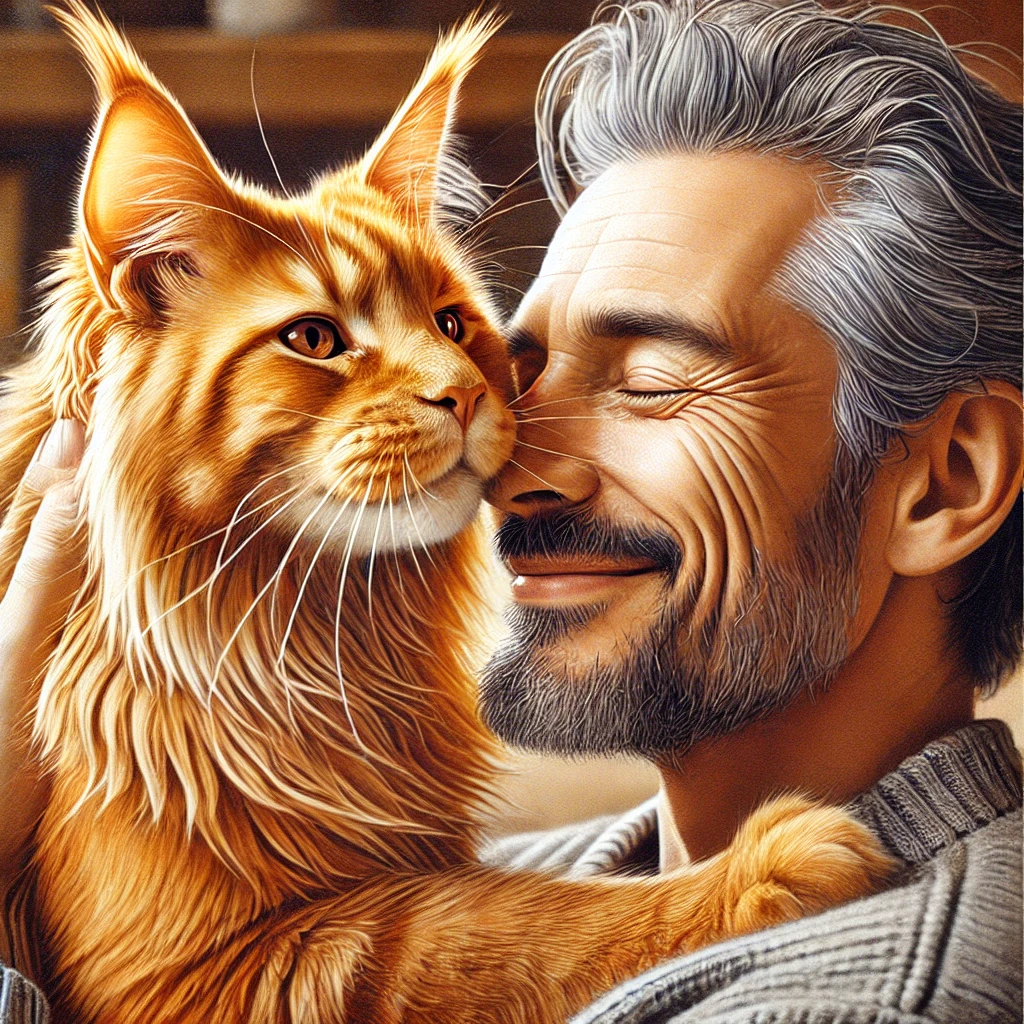
The Rising Trend of Choosing Maine Coon Kittens Over Parenthood: Companions for Families, Only Children, and Empty Nesters
In recent years, a fascinating trend has emerged: more people are choosing to bring Maine Coon kittens into their lives as an alternative to starting or expanding their families. This shift reflects evolving social values and priorities, as well as the incredible companionship these gentle giants offer. Maine Coons are filling roles traditionally held by children in many households, whether it’s providing a sibling-like presence for only children or bringing joy to empty nesters. Let’s explore why Maine Coons have become so popular in these family roles and what makes them ideal for those seeking companionship without the full demands of parenthood.

In recent years, a fascinating trend has emerged: more people are choosing to bring Maine Coon kittens into their lives as an alternative to starting or expanding their families. This shift reflects evolving social values and priorities, as well as the incredible companionship these gentle giants offer. Maine Coons are filling roles traditionally held by children in many households, whether it’s providing a sibling-like presence for only children or bringing joy to empty nesters. Let’s explore why Maine Coons have become so popular in these family roles and what makes them ideal for those seeking companionship without the full demands of parenthood.
Why People Are Choosing Maine Coons Over Parenthood
1. Changing Social Norms
• Delayed Parenthood: Many couples are delaying or even opting out of parenthood, influenced by career goals, financial considerations, and a desire for personal freedom. While raising children feels like a lifelong commitment, caring for a pet—especially one as friendly and independent as a Maine Coon—can feel more manageable and still bring the warmth of a family bond.
• Pets as Family Members: Pets today are more than just animals; they’re family. For singles, couples, or even households with only one child, Maine Coons can fill a unique space in the family. Known for their affectionate and sociable nature, these cats bond deeply with their humans, offering a rich, fulfilling relationship.

The Appeal of Maine Coons in Various Family Settings
1. For Families with Only Children
Maine Coons can make an excellent “sibling” for an only child. They’re friendly, playful, and thrive on interaction, making them ideal companions for children.
• Companionship for Only Children: Maine Coons can fill the space of an additional family member, providing a sense of connection and play that only children might otherwise miss. Their playful personalities and love for human interaction mean they often take on the role of a gentle, fluffy friend—someone to play with, talk to, and confide in.
• Teaches Responsibility Without the Pressure of a Sibling: Caring for a Maine Coon can help children learn responsibility, empathy, and patience, similar to what they might learn with a sibling. Feeding, grooming, and playing with a pet helps kids feel a sense of purpose without the complexity of sibling dynamics.

2. For Empty Nesters
When children leave home, many parents find that having a Maine Coon helps fill the emotional space their kids once occupied.
• Companionship Without Complexity: Maine Coons offer companionship, affection, and comfort, helping to ease the transition of an empty nest. They’re known to follow their humans from room to room, engaging in daily routines and bringing a sense of life and presence to a home that might feel a little too quiet.
• Emotional Support: Empty nesters often find that Maine Coons offer a different but equally fulfilling kind of love and companionship. These gentle giants have a knack for tuning into their humans’ emotions, which can bring great comfort during what can be a bittersweet life transition.

Why Maine Coons Are So Appealing
1. Affectionate Companionship
Maine Coons are known for their friendly, social personalities. They often develop strong bonds with their humans and enjoy being part of the family’s daily activities. Whether you’re an only child looking for a playmate or an empty nester in need of companionship, Maine Coons provide a loyal and loving presence.

2. Playful and Engaging
Maine Coons retain their playful energy throughout life, making them engaging companions. They’re curious, intelligent, and love interactive play, so whether you’re a child with energy to spare or an adult who enjoys having a lively companion, a Maine Coon is ready to meet you at your level.
3. Lower Commitment Than Raising Children
Caring for a Maine Coon is a commitment, but it’s one many find more approachable than raising a child. Maine Coons offer a blend of independence and companionship, making them perfect for people who want to focus on other life goals or enjoy some flexibility in their routines.

4. Health Benefits
Studies show that pets can boost mental health by reducing stress and increasing happiness. Maine Coons, with their gentle and loving nature, provide emotional support that can be beneficial for everyone in the family, from children to empty nesters.

Lifestyle Compatibility
1. Perfect for Urban Living
For people in urban settings, Maine Coons adapt well to apartment living. They don’t require the space or accommodations that children might, and their needs fit well with the pace of city life.

2. Flexibility for Busy Schedules
Maine Coons are independent enough to handle their alone time, which allows for flexibility in lifestyle. For busy families, single parents, or empty nesters with active social lives, a Maine Coon can be the perfect companion who’s there when you need them but can manage on their own as well.

3. More Manageable Financial Commitment
Raising children can be financially challenging, but the cost of caring for a Maine Coon, while still an investment, is generally lower. This balance makes it easier for families to allocate their resources toward travel, hobbies, or other experiences while still having the joy of a beloved family member.

A New Kind of Family Bond
The trend of choosing Maine Coon kittens over traditional parenthood, or as companions in families with one child or empty nests, is growing. Maine Coons’ affectionate personalities, playful nature, and compatibility with various lifestyles make them a wonderful fit for people seeking deep, fulfilling bonds without the complexities of raising children.
Maine Coons can bring a sense of connection, companionship, and joy to households in unique ways. Whether they’re an only child’s best friend or a source of comfort for parents adjusting to an empty home, Maine Coons are proving that love comes in many forms—and it’s sometimes covered in fur.